The Paiva River flows through one of northern Portugal’s most dramatic natural landscapes. Between forested mountains and deep rocky gorges, its water alternates between quiet pools, river beaches and energetic white-water rapids.
The best-known section lies within the Arouca UNESCO Global Geopark, where visitors can follow wooden walkways above the river, cross the immense 516 Arouca suspension bridge, swim at designated river beaches or join guided rafting and kayaking trips.
Sponsored Popular Items
Quick take: Musement.com offers a worldwide selection of tours and attractions
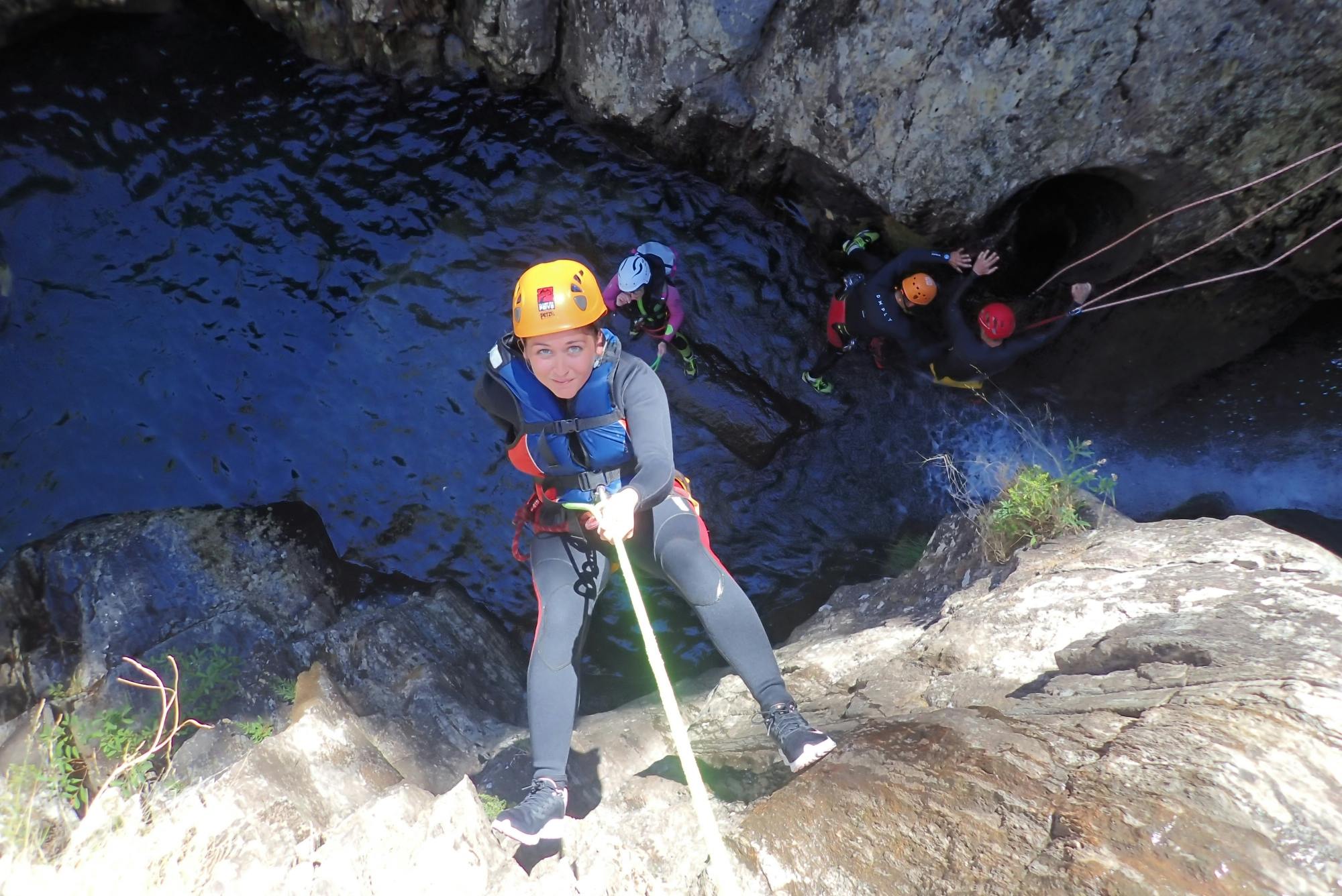
Paiva River Six-Hour Canyoning Experience from Arouca Paiva river six-hour canyoning experience from Arouca is for travellers who want movement, scenery and a more active element in their itinerary. Paiva river six-hour canyoning experience from Arouca: experience overview Experience the Paiva river six-hour canyoning experience from Arouca to Feel the excitement of an activity between the river and the trees. Perfect for those who enjoy nature and adventure. This is also for everyone with routes chosen for the little ones, the amateurs, and the more adventurous. This makes the experience a useful option when planning time in Arouca. The listing describes this as a six-hour experience. Routes,…
The river is often promoted as a day trip from Porto, but the area deserves more than a hurried visit. Arouca’s mountain roads, geological sites, villages and outdoor activities can easily fill two or three days.
Visitors planning the Paiva Walkways must pay particular attention to current access conditions. Wildfires damaged part of the route in 2025, and reconstruction work has affected the section between Vau and Espiunca. At the time of writing, official visitor information indicates access on the Areinho–Vau side, while the complete reopening date remains subject to construction progress and safety approval.
Paiva River Quick Facts
Visitor information
Details
Country
Portugal
Main visitor area
Arouca UNESCO Global Geopark
River source
Serra de Leomil, near Moimenta da Beira
River mouth
Douro River between Castelo de Paiva and Cinfães
Approximate river length
110 kilometres
Usual full walkway length
Approximately 8–8.7 kilometres, linear
Normal full-route walking time
Approximately 2.5–3 hours
Current walkway access
Check official notice; the Areinho–Vau section is currently referenced
Suspension bridge
516 Arouca
Bridge length
516 metres
Bridge height above river
Approximately 175 metres at the highest point
Minimum bridge age
6 years
Main activities
Walking, bridge crossing, rafting, kayaking and river swimming
Best outdoor seasons
Spring and early autumn
Best rafting season
Usually the wetter months, subject to river level
Distance from Porto
Approximately 70 kilometres to Arouca, with additional driving to the river
Important: Wildfire damage, weather, high water, rockfall risk and maintenance can close sections of the walkways or the suspension bridge. Confirm the current operating status on the day of your visit.
What Is the Paiva River?
The Paiva rises in the Serra de Leomil in central-northern Portugal and travels for roughly 110 kilometres before joining the Douro River.
Its upper reaches pass through rural landscapes, woodland and traditional communities. Farther downstream, the river cuts through the mountainous territory of Arouca, creating narrow gorges, rapids, waterfalls and deep pools.
This middle and lower section has become internationally known for:
The Paiva Walkways.
The 516 Arouca suspension bridge.
White-water rafting and kayaking.
River beaches.
Geological formations.
Mountain villages.
Protected wildlife and plant habitats.
The river is not contained within one attraction or one town. Visitors exploring the Paiva may travel through Arouca, Alvarenga, Canelas, Espiunca, Paradinha, Meitriz, Janarde, Castelo de Paiva and several smaller communities.
Why Visit the Paiva River?
The Paiva offers a particularly strong combination of accessible scenery and genuine outdoor adventure.
The wooden walkways make sections of a previously difficult gorge reachable to ordinary hikers. At the same time, the river retains enough power to support some of Portugal’s best-known rafting and kayaking routes.
Visitors may come for:
A scenic day trip from Porto.
A challenging gorge walk.
The experience of crossing a very high suspension bridge.
Swimming in clear mountain water.
Rafting through rapids.
Geological and nature photography.
Traditional food in Arouca and Alvarenga.
A quiet rural stay away from the coast.
The character of the river changes throughout the year. In winter, higher flow creates energetic rapids and powerful waterfalls. In summer, the river is often calmer, exposing rocks and creating attractive swimming pools.
Current Walkway Access and Reconstruction
Visitors should be aware that older articles may describe the complete Paiva Walkways route from Areinho to Espiunca as continuously open.
Wildfires in July 2025 damaged approximately 3.8 kilometres of the walkway between Vau and Espiunca.
A reconstruction contract was signed in February 2026 with an expected six-month construction period. The work is intended to rebuild the damaged section and restore the complete route, but an estimated construction period is not the same as a confirmed public reopening date.
At the time of writing, official 516 Arouca guidance refers to access to the Paiva Walkways between Areinho and Vau.
What This Means for Visitors
Do not assume the complete Areinho–Espiunca trail is open.
Check the official booking platform before selecting an entrance.
Confirm whether Vau is operating as the turnaround or exit point.
Arrange transport based on the currently open section.
Do not pass barriers or enter reconstruction areas.
Allow for changes announced at short notice.
The remainder of this guide describes both the traditional complete route and the shorter access currently being promoted. This distinction is important when calculating distance, timing and transport.
The Paiva Walkways
The Paiva Walkways, known in Portuguese as Passadiços do Paiva, follow the left bank of the river through the Arouca Geopark.
The complete linear route was created between Areinho and Espiunca, with Vau approximately midway.
The infrastructure includes:
Wooden boardwalks attached to the gorge slopes.
Long staircases.
Sections of compacted earth.
Viewing platforms.
River access points.
Interpretive signs.
Emergency telephones.
Connections to the 516 Arouca bridge area.
Traditional Full Route
When every section is open, the route measures approximately 8.7 kilometres and normally takes two and a half to three hours in one direction.
This estimate does not include:
Long photography stops.
Swimming.
Lunch.
The suspension-bridge visit.
Waiting for transport.
Returning in the opposite direction.
Areinho to Vau
The currently referenced Areinho–Vau section includes some of the most dramatic scenery near the bridge, Aguieiras Waterfall and the narrow Paiva Gorge.
Depending on the operational arrangement, visitors may need to:
Return to Areinho along the same route.
Use an authorised taxi or transfer from Vau.
Combine the walk with the suspension bridge.
Confirm the exit and return plan before beginning.
Which Direction Should You Walk?
On the traditional complete route, the official recommendation describes Areinho towards Espiunca as the less physically demanding direction.
Starting at Areinho allows hikers to deal with the major staircase near the bridge area earlier and then continue generally downstream.
Starting at Areinho
Advantages include:
Less demanding overall direction on the complete route.
Convenient access to the 516 bridge area.
Areinho river beach at the beginning or end.
Some of the most dramatic scenery appears early.
The major disadvantage is the significant staircase if approaching the bridge from the Areinho side.
Starting at Espiunca
When this entrance is open, starting at Espiunca can suit visitors making a return walk because the hardest climbing is not left entirely until the end.
The Espiunca side also has cafés, parking and a river recreation area.
Current Partial Route
During reconstruction, normal direction advice may not apply. Follow the temporary route shown on the current ticket and official map.
The 516 Arouca Suspension Bridge
The 516 Arouca is one of the longest pedestrian suspension bridges in the world.
It stretches 516 metres across the Paiva Gorge and reaches approximately 175 metres above the river at its highest point.
The bridge deck is constructed from metal grating. Visitors can see the gorge and river through the floor while crossing.
What the Experience Is Like
The bridge moves slightly under wind and pedestrian movement. This is normal, but the combination of height, visible floor and motion can be difficult for visitors with vertigo.
Views include:
The Paiva River far below.
Aguieiras Waterfall.
Rocky gorge walls.
Forested slopes.
Sections of the wooden walkways.
Guided Entry
Bridge visits operate at fixed times and include an introduction from an official interpreter.
The complete experience normally lasts around 90 minutes, including meeting, briefing, access and crossing.
Visitors must arrive at the meeting point before the booked time. Arriving at the car park 15 minutes before the visit is not sufficient because the bridge cannot be reached directly by vehicle.
Age and Footwear Rules
Children under six are not permitted on the bridge.
Visitors aged six to 17 must be accompanied by an adult.
Secure sports shoes or hiking shoes are required. Flip-flops, narrow heels and unsuitable footwear may result in refused entry.
Reaching the Bridge
There is no car park immediately beside the bridge.
Visitors approach from either:
The Areinho and Canelas side.
The Alvarenga side.
From Areinho
The walk from Areinho is physically demanding and includes roughly 500 steps.
Allow approximately 45 to 60 minutes, depending on fitness and crowding.
This entrance works naturally with the Paiva Walkways but is not the easiest choice for anyone with knee problems.
From Alvarenga
The Alvarenga-side parking areas provide a less strenuous approach.
The walk may take approximately 20 minutes from the closest recommended area, depending on the parking location.
This is generally the preferred access for visitors who only want to cross the bridge or who require the least demanding available approach.
Timing Advice
Plan backwards from the bridge booking time.
Allow time for:
Finding the correct parking area.
Using toilets before the walk.
Walking to the meeting point.
Unexpected steep sections.
Photography and short rests.
Geology and River Landscapes
The Paiva Valley forms part of the Arouca UNESCO Global Geopark, a territory recognised for geological heritage of international importance.
The river crosses rocks hundreds of millions of years old and exposes evidence of ancient marine environments, mountain-building processes and long periods of erosion.
Paiva Gorge
The Paiva Gorge extends through a narrow section between Alvarenga Bridge and Vau.
Here, the river is compressed between steep walls, creating strong current, rapids and polished rock formations.
Aguieiras Waterfall
Aguieiras Waterfall descends along fractures in the granite slope near the suspension bridge.
Its appearance changes dramatically with rainfall. It can be powerful during wetter months and much lighter in dry summer conditions.
Gola do Salto
Gola do Salto is a river feature associated with fast water and exposed rock. It is especially dramatic when river flow is high.
Espiunca Fault
The Espiunca Fault provides visible evidence of movement within the Earth’s crust and is one of the recognised geological sites along the full walkway route.
Giant Potholes
Swirling water and stones have carved circular depressions into the riverbed in several places. These formations are sometimes called giant’s kettles or potholes.
They should be viewed from the walkway rather than approached during strong flow.
River Beaches
The Paiva has several recreation and swimming areas. Conditions, water quality and supervision vary by season.
Areinho River Beach
Areinho is one of the principal access points for the walkways and bridge.
Facilities may include:
Parking.
Toilets.
Picnic space.
Café or seasonal refreshments.
River access.
Outdoor-activity meeting points.
It is a convenient place to cool down after walking, but swimmers must remain aware of changing current and water depth.
Vau Recreation Area
Vau lies around the middle of the traditional full walkway route.
It provides a picnic and rest area with toilets, river access and a suspension footbridge across the water.
During partial-route operation, Vau may function as an exit or turnaround point.
Espiunca River Area
Espiunca traditionally forms the western end of the complete walkways.
The village has a river recreation area, cafés and outdoor-activity facilities. Access may be affected by the reconstruction of the damaged walkway section.
Other Paiva Swimming Areas
Additional river beaches and natural bathing areas can be found farther upstream and downstream, including locations near rural villages.
Not every attractive pool is officially supervised or approved for bathing. Follow signs and local health advice.
Swimming Safely in the Paiva
The river can look calm while still carrying a powerful current.
Water level and flow vary with rainfall, dam management upstream and seasonal conditions.
Safety Rules
Use recognised river beaches and recreation areas.
Observe warning signs.
Do not enter immediately above rapids or waterfalls.
Avoid diving into water of unknown depth.
Supervise children continuously.
Wear water shoes where rocks are slippery.
Do not swim alone.
Leave the water during storms.
Do not enter during visibly high or muddy flow.
Keep away from rafting routes when groups are passing.
Water Temperature
Even in summer, the Paiva can feel cool because it is a mountain-fed river.
Enter gradually rather than jumping directly into deep water.
Water Quality
Official bathing status can change. Do not assume that clear-looking water has automatically been approved for swimming.
Check local notices at the river beach, particularly after heavy rain or any reported water-quality concern.
Rafting and White-Water Activities
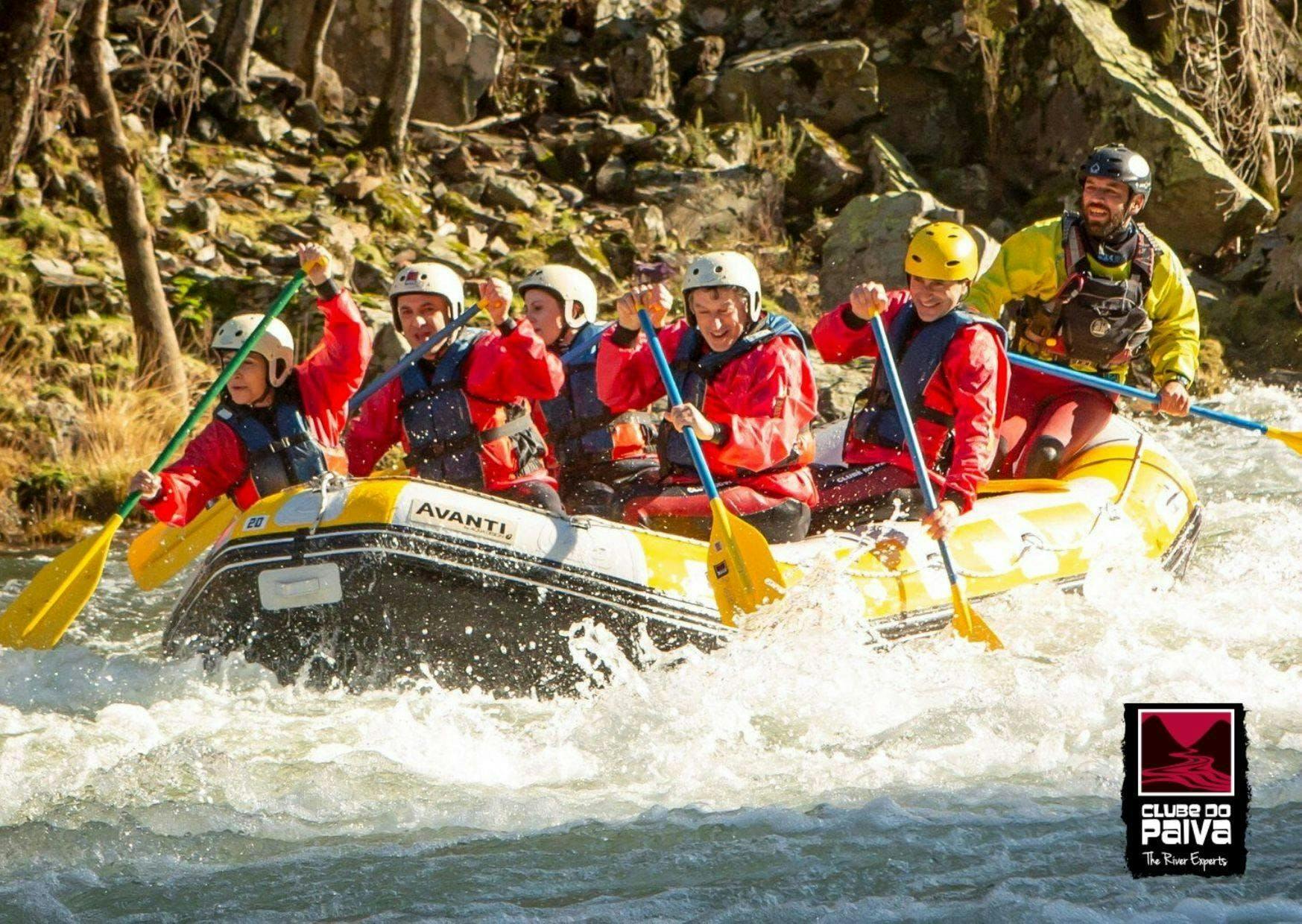
The Paiva is one of Portugal’s classic white-water rivers.
Rafting conditions are usually strongest during the wetter months, when rainfall increases flow through the gorge.
In summer, lower water levels may shift activities towards canoe-rafting, river tubing, canyoning or gentler sections.
What a Rafting Trip Includes
A typical guided experience may provide:
Wetsuit.
Helmet.
Buoyancy aid.
Paddle.
Safety briefing.
Qualified guide.
Transport to or from the river.
Changing facilities.
Insurance under the operator’s conditions.
Common River Sections
Operators choose the route according to water level and participant experience.
Sections may include:
Paradinha to Areinho.
Meitriz to Areinho.
Vau to Espiunca.
Other technically selected stretches around Alvarenga and Espiunca.
The exact names advertised can change because operators adapt to river conditions.
Do You Need Experience?
Many commercial rafting trips are designed for beginners with normal fitness.
Participants must still follow commands, paddle actively and be comfortable with the possibility of entering cold moving water.
Health Restrictions
Rafting may not suit people with:
Serious heart conditions.
Uncontrolled epilepsy.
Recent surgery.
Severe back or joint problems.
Pregnancy.
Inability to swim or remain calm in water, depending on operator rules.
Disclose medical issues before booking.
Kayaking, Canoe-Rafting and Canyoning
White-Water Kayaking
The Paiva Gorge contains technical rapids suitable for experienced paddlers.
Independent visitors should not attempt difficult sections without local knowledge, suitable equipment and recognised white-water competence.
Canoe-Rafting
Canoe-rafts are inflatable boats generally carrying one or two participants. They provide more independence than a large raft while remaining more forgiving than a rigid white-water kayak.
This activity is often offered when water levels are moderate.
River Tubing
Tubing may operate on suitable calmer sections during warm weather.
It should still be booked with an authorised operator because rocks, strainers and current create hazards.
Canyoning
Canyoning trips take place in streams and waterfall systems around the Arouca Geopark rather than simply floating along the main river.
Activities may involve:
Walking through water.
Rappelling.
Natural slides.
Jumps.
Swimming in rock pools.
Difficulty varies significantly. Choose a level suitable for the least experienced person in the group.
Wildlife and Nature
The Paiva corridor supports woodland, riverbank vegetation, fish, amphibians, reptiles, mammals and birds of prey.
Wildlife is usually easier to observe early in the morning or away from busy visitor areas.
Possible sightings include:
Herons.
Kingfishers.
Birds of prey.
Otter signs or occasional otters.
Lizards.
Frogs and other amphibians.
Dragonflies.
Native river fish.
Some species are threatened or protected. Visitors should observe animals from a distance and avoid disturbing nests, dens and riverbank vegetation.
How to Get to the Paiva River
The Arouca section of the river is easiest to explore by car, organised transfer or guided tour.
Arouca town is the principal service centre, but the river access points lie roughly 15 kilometres or more from the town centre along winding rural roads.
By Car
Driving provides the greatest flexibility.
Roads are generally surfaced but can be:
Narrow.
Winding.
Steep.
Slow behind local traffic.
Busy near attractions during weekends.
Do not estimate travel time based only on distance.
Public Transport
Public transport to Arouca is limited compared with major Portuguese destinations, and direct services to Areinho, Vau or Espiunca are not designed around every visitor schedule.
Travellers without a car generally find it easier to:
Book a day tour from Porto.
Arrange a private transfer.
Stay in Arouca and use local taxis.
Reserve a guided activity that includes transport.
Visiting from Porto
The Paiva River can be visited as a long day trip from Porto.
Allow around 75 to 100 minutes each way by road, depending on the precise river entrance, traffic and chosen route.
Independent Day Trip
A hire car allows visitors to:
Choose an early bridge time.
Stop in Arouca.
Visit a river beach.
Arrange a taxi between walkway access points.
Remain for dinner.
Organised Tour
Porto-based tours commonly include:
Hotel or central pickup.
Transport to Arouca.
Paiva Walkways access.
The suspension bridge on selected packages.
Local lunch.
Arouca town or village stop.
Read the route carefully. During reconstruction, tours may advertise an adapted partial walk rather than the complete historical route.
Avoid an Overloaded Schedule
Walking, bridge access and mountain driving take time. A package that promises the bridge, full walkways, rafting, lunch and several distant attractions in one day may feel rushed.
Parking and Transfers
Free parking is normally available at Areinho, Espiunca and designated Alvarenga-side bridge access areas.
The car parks are not supervised. Do not leave passports, luggage or electronics visible inside the vehicle.
Linear Route Problem
The full Paiva Walkways route is linear rather than circular.
When the entire trail is open, visitors usually solve the transport problem by:
Leaving one car at each end.
Using a taxi.
Booking an organised transfer.
Walking both directions.
A return walk effectively doubles the distance and is demanding.
Current Partial Route
During partial operation, ask whether transport is available from Vau and whether visitors are expected to return to Areinho on foot.
Do not assume a taxi will be waiting without a reservation.
Tickets and Reservations
Paiva Walkways
A reservation is required to enter the managed walkway route.
Tickets should be purchased through the official reservation system before travelling.
There is no normal ticket booth at the walkway entrances. Limited same-day assistance may be available through the Arouca tourism office, but visitors should not depend on this.
Ticket prices have historically been low, but the displayed online price and available entrance points should be treated as the current authority.
516 Arouca
The bridge requires a separate timed booking.
At the time of writing:
Individual admission is listed at €12.
Tickets are sold online.
Tickets are not sold at the bridge entrance.
The bridge ticket includes eligible same-day access to the currently operating Paiva Walkways section.
Entry numbers are limited.
Family packages are also available under the current published conditions.
Book Early
Advance booking is particularly important for:
Summer weekends.
Public holidays.
Spring school holidays.
Early-morning bridge times.
English-language guided slots.
Opening Hours
Published walkway hours normally vary by season:
Period
Opening
Last entry
Closing
November to March
9:00 am
3:00 pm
5:00 pm
April and October
9:00 am
4:00 pm
7:00 pm
May to September
8:00 am
5:00 pm
8:00 pm
The 516 Arouca bridge uses guided times within broadly similar seasonal opening periods.
Weather, fire danger and maintenance may override normal hours.
The Best Time to Visit
March to May
Spring is one of the best periods for walking.
Advantages include:
Greener vegetation.
Strong waterfalls.
Comfortable temperatures.
Good river flow.
Rain can make wooden surfaces and rocks slippery.
June
June often provides warm weather without the most intense summer heat.
It is a good compromise for walking and river swimming, although water may remain cool.
July and August
Summer brings the greatest demand and highest temperatures.
Walk early in the morning and avoid exposed staircases during the hottest part of the day.
River flow is generally lower, and some white-water activities may change format or location.
September and October
Early autumn provides comfortable walking and fewer visitors.
Water levels may still be low until significant rain arrives.
Winter
Winter is the principal white-water season when rainfall is suitable.
The walkways can be cold, wet and slippery, while the bridge is more vulnerable to wind closure.
Weather and Seasonal Conditions
Conditions at the river can differ considerably from Porto or Portugal’s coast.
The valley may experience:
Heavy rain.
Strong sun.
Morning mist.
Rapid temperature changes.
High fire danger.
Wind at the suspension bridge.
Hot Weather
Carry more water than expected. Long staircases and dark wooden surfaces can become extremely hot.
Rain
The walkway can remain open in light rain, but storms, flooding or landslide risk may cause closure.
Wind
Strong wind can close the 516 bridge even when the walkways remain accessible.
Wildfire Risk
Summer fires are a serious regional danger.
Do not smoke, light fires or ignore official closures. Reconstruction following the 2025 fire demonstrates how severely wildfire can affect the landscape and infrastructure.
Walking Difficulty and Fitness
The official classification of the complete Paiva Walkways route is difficult.
The challenge comes from:
Long staircases.
Steep gradients.
Approximately 8.7 kilometres of continuous walking on the full route.
Heat.
Limited shortcuts.
A linear route requiring transport or a return walk.
The wooden surface itself is generally stable, but the volume of steps can be difficult for knees.
Who May Struggle?
The route may be unsuitable for people with:
Serious knee or hip problems.
Poor balance.
Limited cardiovascular fitness.
Severe vertigo.
Difficulty managing long staircases.
A shorter Areinho–Vau visit may still be demanding because of the bridge-area stairs.
Accessibility
The Paiva Walkways are not wheelchair accessible.
Stairs, steep gradients, narrow sections and uneven ground prevent a continuous step-free route.
The 516 Arouca bridge has arrangements for visitors with reduced mobility, but advance contact is compulsory and entry must take place through the Alvarenga side.
Visitors needing assistance should contact the Arouca tourism office before purchasing tickets.
The river beaches and rural viewpoints vary considerably in accessibility. Some recreation areas can be approached by vehicle, but soft ground, rocks and steep riverbanks remain obstacles.
Visiting with Children
Older active children may enjoy the walkways, bridge and river beaches.
Parents should consider:
The number of stairs.
Summer heat.
Limited opportunities to leave the route.
Cold river water.
High bridge exposure.
The child’s comfort with heights.
Pushchairs are not permitted or practical on the walkways.
Children under six cannot enter the 516 bridge.
Children must be closely supervised near the river because current can be strong even where the surface appears calm.
What to Wear and Bring
Walking shoes: Use trainers or hiking shoes with good grip.
Water: Carry enough for the complete walk and delays.
Sun protection: Bring sunscreen, sunglasses and a hat.
Light rain jacket: Mountain weather can change quickly.
Small backpack: Large luggage is impractical.
Food or snacks: Facilities are limited between access areas.
Charged phone: Keep tickets and emergency numbers available.
Offline map: Useful on rural roads.
Swimwear and towel: For designated river beaches.
Water shoes: Helpful on slippery rocks.
Medication: Carry anything needed during a long outdoor day.
Do not wear flip-flops on the bridge or walkways.
Food and Facilities
Cafés and simple restaurants operate near the main ends of the traditional walkway route and in nearby villages.
Facilities can be seasonal, and opening hours may not match early bridge visits.
Toilets
Toilets are normally available at:
Areinho.
Vau.
Espiunca when access is operating.
Selected Alvarenga-side areas.
The nearest toilet to the bridge may still be a substantial walk away.
Picnics
Authorised picnic areas are available at the recreation zones.
Visitors must remove rubbish and should not set up tents, play loud music or block paths.
Local Food
Arouca is known for substantial mountain cuisine.
Dishes and products may include:
Arouquesa beef.
Roast veal.
Goat and lamb dishes.
Regional sausages.
Local cheeses.
Convent sweets.
Pão de ló sponge cake.
Chestnut and honey products.
Things to Do in Arouca
Arouca Monastery
The Monastery of Santa Maria de Arouca is one of the town’s principal historic monuments.
It is closely associated with Queen Mafalda and contains religious art and architectural features from several periods.
Arouca Geopark Visitor Information
The tourism office provides maps, current access information and advice about geological sites and activities.
It is a useful first stop when road, trail or wildfire conditions are uncertain.
Trilobite Museum
The Geological Interpretation Centre of Canelas displays exceptionally large trilobite fossils found in local slate quarries.
Pedras Parideiras
The “birthing stones” near Castanheira are a rare geological phenomenon in which dark nodules separate naturally from the surrounding granite.
Freita Mountain
The Serra da Freita offers viewpoints, waterfalls, walking routes and highland scenery.
Villages of the Paiva Valley
Alvarenga
Alvarenga is the principal village close to the suspension bridge and Paiva Gorge.
It has restaurants, accommodation and access routes towards the bridge.
Paradinha
Paradinha is a traditional schist village above the river.
Its stone houses and surrounding slopes provide a quieter view of the Paiva Valley.
Meitriz
Meitriz is another recognised village associated with historic river crossings and rural life.
Espiunca
Espiunca developed as one of the principal walkway and white-water activity centres.
Its role may be temporarily reduced while the damaged trail section is rebuilt.
Suggested One-Day Paiva River Itinerary
7:30 am: Leave Porto
Travel by car or prearranged tour towards Arouca and the appropriate bridge access.
9:00 am: Arrive Near the Bridge
Park on the Alvarenga side for the easier approach or at Areinho when combining the bridge with the walkways.
10:00 am: Cross the 516 Arouca Bridge
Join the official interpreter and complete the guided visit.
11:30 am: Begin the Open Walkway Section
Follow the currently authorised Areinho–Vau route or the official temporary itinerary.
1:30 pm: Lunch or Picnic
Eat at a recreation area or return to a nearby village restaurant.
3:00 pm: Visit a River Beach
Swim only when conditions and signs indicate that it is safe.
4:30 pm: Explore Arouca
Visit the monastery, tourism office or town centre.
6:00 pm: Early Dinner
Try Arouquesa beef or regional dishes before returning to Porto.
Suggested Two-Day Itinerary
Day One: Walkways and Bridge
Arrive early in Arouca.
Cross the 516 bridge.
Walk the currently open Paiva section.
Relax at Areinho or Vau.
Stay overnight in Arouca, Alvarenga or a rural guesthouse.
Day Two: Adventure or Geology
Choose between:
A guided rafting trip.
Canoe-rafting or canyoning.
The Trilobite Museum.
Pedras Parideiras.
Serra da Freita.
Paradinha and Meitriz.
Two days reduce the pressure to combine a fixed bridge time, difficult walking, lunch and long driving in one schedule.
Responsible Visiting
The Paiva Valley is a protected natural and geological environment.
Remain on the authorised walkway.
Respect closure barriers.
Do not remove rocks, quartz or plants.
Do not smoke or light fires.
Carry rubbish to designated bins.
Avoid loud music.
Do not enter rafting channels while groups are approaching.
Use recognised river access points.
Observe wildlife from a distance.
Do not fly drones without permission.
Use registered outdoor-activity operators.
Do not damage rebuilt or fire-affected areas.
Official sources have published inconsistent pet information for the walkways in the past. Confirm the current rule before travelling with an animal. Pets are not permitted on the 516 Arouca bridge.
Is the Paiva River Worth Visiting?
The Paiva River is one of Portugal’s strongest inland nature destinations.
Main Advantages
Dramatic gorge scenery.
One of the world’s longest pedestrian suspension bridges.
Well-developed walking infrastructure.
White-water rafting and kayaking.
River beaches.
UNESCO-recognised geological heritage.
Easy combination with Arouca’s food and historic centre.
Possible as a day trip from Porto.
Possible Drawbacks
Current partial walkway closure.
Steep stairs and difficult walking.
Limited public transport.
Fixed bridge times.
Weather-related closures.
Very hot summer conditions.
Linear trail requiring return transport.
Busy weekends and holidays.
The visit is most rewarding when travellers check the current trail status, reserve the bridge in advance and avoid trying to fit too many activities into one day.
Frequently Asked Questions About the Paiva River
Where is the Paiva River?
It flows through northern and central-northern Portugal before joining the Douro River between Castelo de Paiva and Cinfães.
Where does the Paiva River begin?
It rises in the Serra de Leomil near Moimenta da Beira.
How long is the Paiva River?
It is approximately 110 kilometres long.
What is the best-known section?
The most visited section is inside the Arouca UNESCO Global Geopark, where the Paiva Walkways and 516 Arouca bridge are located.
Are the complete Paiva Walkways currently open?
Do not assume so. The Vau–Espiunca section was damaged by wildfire in 2025 and is undergoing reconstruction. Check the official status before travelling.
Which section is currently referenced as open?
Current bridge information refers to access between Areinho and Vau.
How long is the complete traditional route?
Approximately 8 to 8.7 kilometres in one direction.
How long does the full walk take?
Usually around two and a half to three hours without long stops.
Is the route circular?
No. The complete route is linear.
How do I return to my car?
Visitors normally use a taxi, transfer service, second vehicle or return on foot. Current partial-route arrangements should be confirmed separately.
Which direction is easier?
On the complete route, Areinho towards Espiunca is normally considered less demanding.
Is the walk difficult?
Yes. It includes steep gradients, long staircases and significant distance.
Can I take a pushchair?
No. The stairs and narrow sections make pushchairs unsuitable.
Is the route wheelchair accessible?
No. The Paiva Walkways are not adapted for wheelchairs.
Is the 516 Arouca bridge wheelchair accessible?
Special arrangements are possible, but advance contact is compulsory and access uses the Alvarenga side.
How long is the 516 bridge?
It is 516 metres long.
How high is the bridge?
The central section is approximately 175 metres above the river.
Is the bridge safe?
Yes, when visitors follow official rules. It may close during strong wind, thunderstorms or other unsafe conditions.
Does the bridge move?
Some movement is normal on a suspension bridge.
Can people with vertigo cross it?
The transparent metal-grating floor and height can be difficult for anyone with strong vertigo.
What is the minimum age?
Visitors must be at least six years old.
Can children cross alone?
No. Visitors aged six to 17 must be accompanied by adults.
How much does the bridge cost?
At the time of writing, an individual ticket is listed at €12.
Can I buy bridge tickets at the entrance?
No. Tickets must be reserved online.
Does the bridge ticket include the walkways?
It includes eligible same-day access to the currently operating Paiva Walkways section under the published conditions.
How early should I arrive?
Arrive at the selected parking area at least 45 to 75 minutes before the booked time, depending on the access route.
Can I drive to the bridge?
No. The final approach must be completed on foot.
Which bridge entrance is easiest?
The Alvarenga side generally involves the less demanding walk.
How many steps are there from Areinho?
The approach includes roughly 500 steps.
Can I swim in the Paiva River?
Yes, at suitable recognised river beaches when conditions and local notices permit.
Is the water warm?
It is usually cool, even during summer.
Are there lifeguards?
Supervision varies by beach and season. Never assume a lifeguard is present.
Is the Paiva good for rafting?
Yes. It is one of Portugal’s best-known white-water rivers.
When is rafting available?
Rafting is most reliable during wetter periods, but operators choose activities according to water level and safety.
Can beginners go rafting?
Many guided trips are suitable for beginners with normal fitness.
Can I kayak independently?
Technical white-water sections should only be attempted by experienced paddlers with local knowledge and proper safety equipment.
Is the Paiva River suitable for children?
River beaches and selected outdoor activities can suit children, but age limits and route difficulty must be checked.
Are dogs allowed?
The bridge does not permit animals. Official walkway information has not always been consistent, so confirm the current rule before travelling with a pet.
Are there toilets?
Toilets are normally available at Areinho, Vau, Espiunca and selected bridge-access areas.
Is food available?
Cafés and restaurants operate near access areas and villages, but opening can be seasonal.
Can I visit from Porto without a car?
Yes, but an organised tour or private transfer is generally easier than relying on public transport.
How long is the drive from Porto?
Allow approximately 75 to 100 minutes each way, depending on the access point and traffic.
Can I see the bridge without crossing it?
Parts of the bridge can be viewed from the walkways and surrounding viewpoints.
Is the waterfall always flowing?
Aguieiras Waterfall is strongest after rain and may be much weaker during dry weather.
What is the best month to visit?
May, June, September and early October generally provide a good balance of scenery and walking temperatures.
Is summer too hot?
Midday summer walking can be extremely hot. Begin early and carry adequate water.
Can the attractions close suddenly?
Yes. Fire, wind, thunderstorms, floods, landslides and maintenance can cause closures.
Can I visit in winter?
Yes, but expect shorter opening hours, rain, slippery surfaces and possible bridge closure due to wind.
Should I stay overnight?
An overnight stay is worthwhile when combining the walkways with rafting, geological attractions or mountain villages.
Sponsored Popular Items
Quick take: Musement.com offers a worldwide selection of tours and attractions
Paiva River rafting experience in Arouca – Outdoor Adventure Paiva River rafting experience in Arouca adds movement, scenery and a more active element to the itinerary. Paiva River rafting experience in Arouca: experience overview Experience the Paiva River rafting experience in Arouca to witness the white water rapids, Paiva's walkways, and the 516 Arouca Bridge. Meet your guide, then gain knowledge by hearing useful and interesting facts. Plus, learn how this area is the habitat of protected and endangered rare species. This makes the experience a useful option when planning time in Arouca. The exact duration can depend on the selected date, option or operating schedule. Routes, start times,…
Final Thoughts
The Paiva River offers one of the most complete outdoor experiences within reach of Porto.
Its steep gorge, clear pools, fast rapids and ancient rocks would be impressive even without visitor infrastructure. The Paiva Walkways and 516 Arouca bridge make this landscape accessible while adding a significant physical challenge and a memorable sense of height.
The current reconstruction of the Espiunca–Vau section means careful planning is essential. Older maps and articles may no longer describe the route available on the day of your visit.
Check the official access notice, reserve the bridge online, allow enough time to walk from the car park and arrange the return journey before entering the trail.
For visitors who prepare properly, the Paiva River remains one of Portugal’s finest destinations for hiking, geology, river swimming and white-water adventure.
Sponsored Popular Items
Quick take: Musement.com offers a worldwide selection of tours and attractions
Paiva River Six-Hour Canyoning Experience from Arouca Paiva river six-hour canyoning experience from Arouca is for travellers who want movement, scenery and a more active element in their itinerary. Paiva river six-hour canyoning experience from Arouca: experience overview Experience the Paiva river six-hour canyoning experience from Arouca to Feel the excitement of an activity between the river and the trees. Perfect for those who enjoy nature and adventure. This is also for everyone with routes chosen for the little ones, the amateurs, and the more adventurous. This makes the experience a useful option when planning time in Arouca. The listing describes this as a six-hour experience. Routes,…
Paiva River rafting experience in Arouca – Outdoor Adventure Paiva River rafting experience in Arouca adds movement, scenery and a more active element to the itinerary. Paiva River rafting experience in Arouca: experience overview Experience the Paiva River rafting experience in Arouca to witness the white water rapids, Paiva's walkways, and the 516 Arouca Bridge. Meet your guide, then gain knowledge by hearing useful and interesting facts. Plus, learn how this area is the habitat of protected and endangered rare species. This makes the experience a useful option when planning time in Arouca. The exact duration can depend on the selected date, option or operating schedule. Routes, start times,…