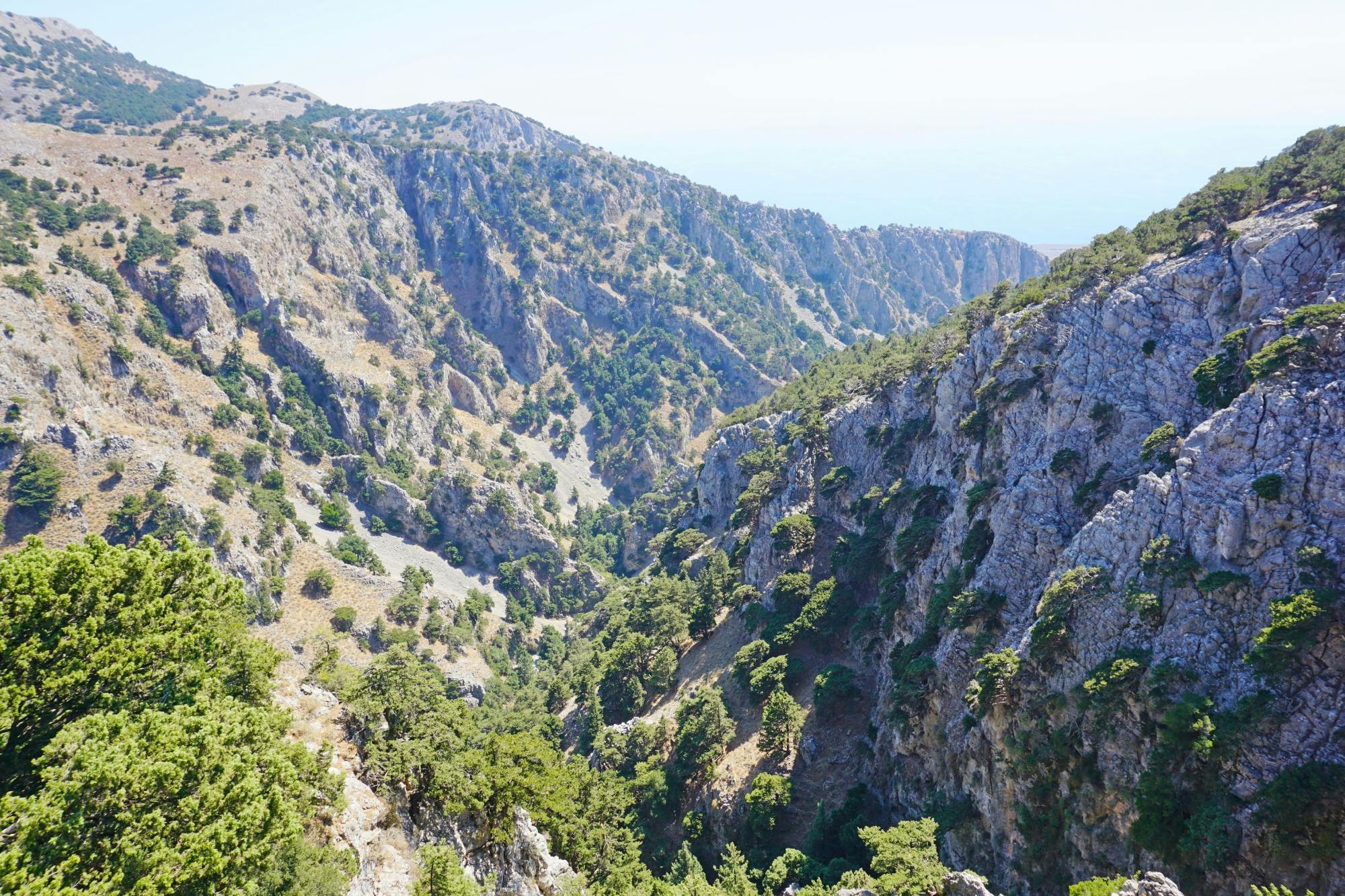
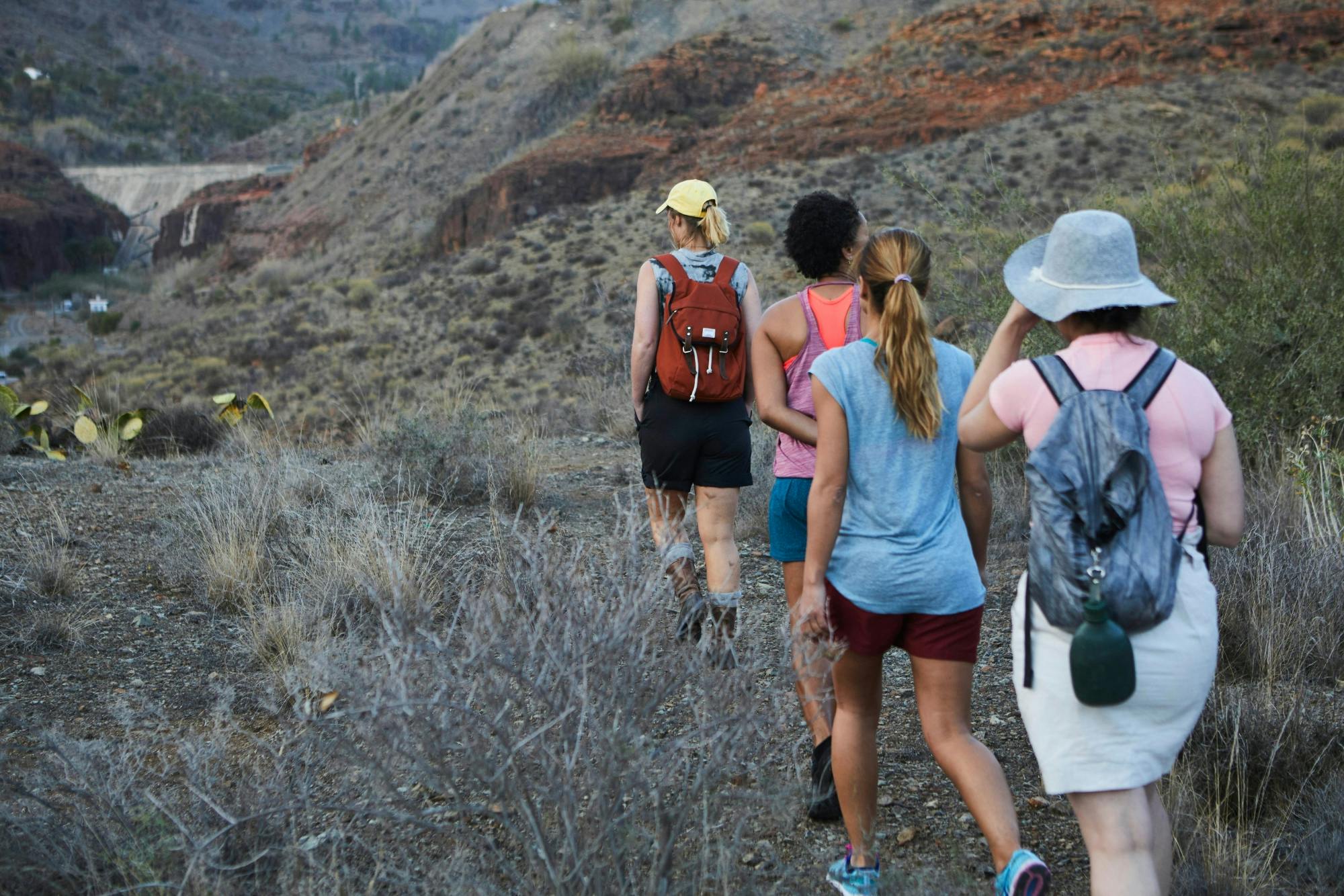
Imbros Gorge offers one of the most rewarding and manageable hikes in western Crete. Cut through the limestone mountains of Sfakia, the gorge combines narrow rock passages, old mule paths, shady woodland and a gradual descent towards the island’s southern coast.
Sponsored Popular Items
Quick take: Musement.com offers a worldwide selection of tours and attractions
Full-day Imbros Gorge hike and Frangokastello Beach visit Greece Plan Full-day Imbros Gorge hike and Frangokastello Beach visit, a outdoor experience, with practical tips on timing, inclusions and what to check before booking. Compare current availability, prices and booking conditions before you go.
It is often described as the easier alternative to Samaria Gorge, but Imbros deserves to be treated as an attraction in its own right. The walk is shorter, transport is simpler, and the gorge remains surprisingly dramatic. At its narrowest points, the cliffs close tightly around the rocky trail, creating a natural corridor barely wide enough for a few people to pass.
The standard route begins near the mountain village of Imbros and finishes near Komitades, above the Libyan Sea. Most reasonably active visitors complete the walk in about two and a half to three hours, although photographers, families and slower walkers should allow longer.
Imbros Gorge Quick Facts
Feature
Practical information
Location
Sfakia, Chania region, southwestern Crete
Normal starting point
Imbros village
Normal finishing point
Near Komitades village
Walking distance
Approximately 8 kilometres
Typical walking time
About 2½–3 hours
Route type
Linear, mainly downhill
Difficulty
Easy to moderate
Terrain
Loose stones, gravel, uneven rock and old paved sections
Best seasons
Spring and autumn
Guide required
No, in normal conditions
Facilities inside
Very limited
The entire natural gorge is sometimes described as being around 11 kilometres long. However, the recognised visitor trail between the entrance near Imbros and the lower exit is usually measured at approximately 8 kilometres.
Why Visit Imbros Gorge?
Imbros is a good choice for visitors who want to experience Crete’s mountain landscape without committing to the long and demanding walk through Samaria Gorge.
The trail is shorter, the transport arrangements are less complicated and both ends of the route are close to roads. There is no need to rely on a ferry to leave the finishing point, as there is after walking Samaria.
Despite being relatively accessible, Imbros still feels wild. Once inside the gorge, road noise disappears and the trail passes through a landscape of vertical cliffs, boulders, cypress trees, shrubs and naturally sculpted limestone.
Reasons to choose Imbros include:
A manageable half-day walking distance.
Dramatic narrow passages and high limestone walls.
Less physical strain than Samaria Gorge.
Convenient access from Chania, Rethymno and Chora Sfakion.
The possibility of combining the hike with a beach visit.
An interesting connection with the history of Sfakia and the Second World War.
Where Is Imbros Gorge?
Imbros Gorge lies in the municipality of Sfakia in the southern part of the Chania region. It runs roughly south from the village of Imbros towards Komitades and the coastal plain near Chora Sfakion.
The village of Imbros stands at an elevation of approximately 780 metres, close to the southern edge of the Askifou Plateau. The road through the area connects northern Crete with Chora Sfakion on the Libyan Sea.
The starting point is normally reached from Chania by driving through Vryses and the Askifou Plateau. From Rethymno, visitors generally travel west towards Vryses before turning south into the mountains.
The Walking Route Through Imbros Gorge
The normal route begins on the southern side of Imbros village. Signs near the village and local tavernas direct walkers towards the upper entrance.
A small entrance charge may be collected during staffed periods. The amount can change, so it is sensible to carry a small amount of cash rather than relying entirely on card payment.
The Upper Section
The first part of the walk descends gradually from the open mountain landscape into the gorge. The path is broad in places and passes through scrub, cypress trees and rocky ground.
This section can feel deceptively easy, but the loose stones begin almost immediately. Walkers should pay attention to their footing rather than trying to move too quickly.
The Middle Section
As the trail continues, the walls become higher and the gorge gradually narrows. The middle section contains some of the most interesting rock formations and several shaded passages.
Remnants of the old paved mule route can still be seen in places. Before the modern road was built, this path formed an important connection between the Sfakia region and northern Crete.
The Narrow Passages
The most memorable parts of Imbros are the narrow corridors where the limestone walls close in around the trail. At the narrowest point, the gap is only around 1.6 to 2 metres wide.
These sections are dramatic but not technically difficult. The trail remains on the floor of the gorge, and there is no need to climb ladders or negotiate exposed ledges.
The narrow passages also provide welcome shade, although temperatures can still become uncomfortable during the hottest part of summer.
The Lower Section
The gorge gradually widens as the route approaches its southern exit. Vegetation becomes more open, and views towards the lower hills and the Libyan Sea begin to appear.
From the official exit area, walkers continue towards the road and the village of Komitades. Depending on where transport is waiting, there may be an additional walk beyond the main gorge trail.
What You Will See Inside Imbros Gorge
Narrow Limestone Corridors
The gorge’s tight rock corridors are its most recognisable feature. In several places, the high walls almost meet above the trail, creating an enclosed and atmospheric passage.
Old Mule Paths
Sections of the historic route remain visible beneath the modern walking trail. These stone-paved areas are reminders that the gorge was once a practical transport route rather than a recreational hike.
Cypress and Fig Trees
Cypress trees, wild fig trees, shrubs and hardy mountain plants grow in cracks and sheltered areas. Spring is particularly attractive, when wildflowers appear along the upper and lower sections.
Natural Rock Arches and Formations
Water, wind and erosion have created arches, overhangs and strangely shaped limestone walls. Some formations are easy to miss, so it is worth stopping occasionally and looking upwards.
Mountain Silence
Imbros is a popular walk, but it can still feel peaceful, especially early in the morning or outside the busiest holiday period. In the quieter sections, the main sounds are footsteps, birds and the movement of wind through the trees.
How Difficult Is Imbros Gorge?
Imbros is generally considered an easy-to-moderate gorge walk. It does not involve technical climbing, major river crossings or steep exposed sections.
However, describing it as easy can be misleading. The path is continuously uneven and covered with loose stones. The downhill direction places pressure on knees, ankles and leg muscles.
The main physical challenges are:
Several hours of walking on unstable stones.
A descent of roughly 600 metres.
Limited places to sit comfortably.
Heat near the lower end of the gorge.
The possibility of tiredness affecting balance.
A person who walks regularly and is steady on uneven ground should normally manage the route without difficulty. Visitors with significant knee, hip, ankle or balance problems should consider whether the rocky descent is suitable.
Which Direction Should You Walk?
Most people walk from north to south, beginning at Imbros village and finishing near Komitades. This direction is mainly downhill and is the easiest way to experience the gorge.
It is possible to walk uphill from Komitades, but the climb is more strenuous and transport arrangements may be less convenient.
Some experienced walkers travel down and then return through the gorge to recover their vehicle. This doubles the distance and changes a moderate half-day walk into a much longer outing. It is not necessary when local return transport is available.
How to Get to Imbros Gorge
By Hire Car
Driving is the most flexible option. Parking is generally available around Imbros village, sometimes in areas associated with local tavernas or cafés.
Before leaving the vehicle, ask where the recognised entrance begins and confirm the current arrangements for returning from Komitades.
The mountain road is paved but winding. Drivers should allow more time than the distance alone might suggest.
By Public Bus
Buses travelling between Chania and Chora Sfakion use the road through the Imbros area. Depending on the seasonal timetable, it may be possible to leave the bus near Imbros village.
Services in this part of Crete are not as frequent as city routes. Check the current KTEL Chania–Rethymno timetable before travelling and confirm that the driver can stop near the required location.
Do not assume that a convenient return bus will be available immediately after completing the walk.
Sponsored Popular Items
Quick take: Musement.com offers a worldwide selection of tours and attractions
Imbros Gorge Four-Hour Hiking Tour in Crete Hora Sfakion Greece Imbros Gorge Hiking Tour in Crete: Mountain Scenery, an 8km Walk and Swimming in Hora Sfakion is for travellers who want movement, scenery and a more active element in their itinerary. Check current availability, inclusions and booking details before you go.
By Organised Tour
Organised excursions operate from Chania, Rethymno and some resort areas. These normally include road transport to the entrance, collection near the exit and time for lunch or swimming on the south coast.
A tour is useful for visitors who do not want to arrange a taxi or recover a hire car. The guide may accompany the group or simply coordinate the transport, so check what is included before booking.
By Taxi
A taxi from Chora Sfakion can take walkers to Imbros village. A return transfer can then be arranged from the lower exit or Komitades.
Agree on the pickup location and likely price before beginning the walk.
Getting Back After the Walk
Imbros Gorge is a one-way route, so anyone leaving a car at the upper entrance must plan how to return.
Local taxis and shared transfer vehicles often operate between the lower exit area and Imbros village during the main visitor season. Availability and prices vary, and vehicles may wait until several passengers are ready.
Possible arrangements include:
Taking a taxi or shared transfer back to Imbros.
Having another person collect you at Komitades.
Joining an organised excursion with included transport.
Continuing to Chora Sfakion by taxi or arranged vehicle.
Leaving a second car near the finishing point.
It is better to arrange transport before entering the gorge rather than hoping that a vehicle will be available at the finish.
The Best Time to Visit Imbros Gorge
Spring
April, May and early June are excellent months for the walk. Temperatures are normally comfortable, vegetation is greener and wildflowers may be visible.
Spring weather can still be unsettled. Avoid entering after heavy rain or when thunderstorms are forecast.
Summer
Imbros can be walked during summer, but the lower part of the trail can become very hot. Begin early in the morning and carry sufficient water.
Although parts of the gorge are shaded, the walk is not continuously protected from the sun.
Autumn
September and October often provide warm conditions with fewer visitors than midsummer. The sea is also warm enough for a swim after the walk.
Later in autumn, monitor the forecast carefully because sudden storms can affect gorge conditions.
Winter
Unlike Samaria, Imbros does not normally have the same strictly controlled operating season. It may be accessible during suitable winter weather.
However, rain, snow in the mountains, falling rocks and flash flooding can make the gorge dangerous. Do not enter simply because there is no locked gate or formal closure notice.
What to Bring
Supportive walking shoes: Choose footwear with good grip and a firm sole.
Water: Carry enough for the entire walk, particularly in summer.
Snacks: There are no reliable food outlets inside the gorge.
Sun protection: Bring sunscreen, a hat and protective clothing.
Small amount of cash: Useful for entry, local transfers and tavernas.
Basic first-aid supplies: Include blister dressings and any personal medication.
Charged phone: Reception may be limited, but a phone remains useful in an emergency.
Offline map: Helpful for locating the entrance, exit and pickup point.
Swimming gear: Worth carrying when continuing to Chora Sfakion or Frangokastello.
Trekking poles are not essential, but they can reduce strain on the knees and improve stability on loose stones.
Walking with Children and Older Visitors
Imbros is often recommended to families because it is shorter and less demanding than Samaria. Active children who are comfortable walking for several hours may enjoy the narrow passages and rock formations.
Parents should remember that the ground is uneven throughout much of the route. Young children need close supervision, particularly where loose stones make slipping more likely.
Older visitors who are generally fit may also find Imbros manageable. The important consideration is not age alone but balance, joint health and confidence on stony ground.
The route is unsuitable for wheelchairs, pushchairs and anyone unable to walk independently across rough terrain.
The History of Imbros Gorge
For generations, Imbros Gorge formed part of the route between the southern Sfakia region and northern Crete. People, animals and goods travelled through the gorge before the modern mountain road provided an easier connection.
The old mule path is still visible in several sections. Walking over the surviving stones gives visitors a clearer sense of the gorge’s former importance to local communities.
Imbros also played a role during the Battle of Crete in 1941. After German forces gained control of much of northern Crete, British, Australian, New Zealand and other Allied troops withdrew south across the mountains.
Many passed through the Imbros area while attempting to reach evacuation points near Chora Sfakion. The modern walk is peaceful, but the rough terrain helps visitors understand how difficult that retreat must have been for exhausted soldiers carrying equipment and moving under wartime conditions.
Safety Advice
Check the mountain weather forecast before starting.
Do not enter during heavy rain or when thunderstorms are expected.
Start early during warm weather.
Wear secure shoes rather than sandals or smooth-soled footwear.
Carry all the water you expect to need.
Do not climb loose rock walls or enter caves.
Keep children close in narrow and rocky sections.
Allow extra time rather than rushing to meet transport.
Tell someone where you are walking.
Carry all rubbish out of the gorge.
Dry Cretan gorges can become dangerous during rain falling higher in the mountains. Flash flooding can occur even when conditions near the entrance initially appear reasonable.
The European emergency number is 112.
Places to Visit Near Imbros Gorge
Chora Sfakion
Chora Sfakion is the main coastal village of the region. It has tavernas, accommodation, small beaches and ferry connections to Loutro and Agia Roumeli.
It is an ideal place for lunch or a swim after completing the gorge.
Komitades
Komitades is the traditional finishing village for the walk. Tavernas in and around the village provide food, cold drinks and a place to rest while waiting for transport.
Frangokastello
Frangokastello lies east of Chora Sfakion and is known for its Venetian fortress and broad coastal setting. It can be combined with Imbros when travelling by car.
Askifou Plateau
The Askifou Plateau lies north of Imbros village. Its mountain scenery and small settlements provide an interesting contrast to the dry southern coast.
Loutro
The roadless village of Loutro is reached by ferry from Chora Sfakion. An overnight stay can turn an Imbros walk into part of a longer exploration of southwestern Crete.
A Suggested Day at Imbros Gorge
8:00 am: Arrive at Imbros Village
Park or leave your transport near the village. Confirm the gorge entrance, return transfer and current weather conditions.
8:30 am: Begin the Walk
Starting early provides cooler temperatures, softer light and a quieter trail.
11:30 am: Finish Near Komitades
Allow additional time when walking with children, taking photographs or stopping frequently.
12:00 pm: Lunch
Eat at a local taverna in Komitades or travel to Chora Sfakion for a meal overlooking the sea.
2:00 pm: Swim or Explore the Coast
Spend the afternoon at a nearby beach, visit Frangokastello or take a short ferry trip from Chora Sfakion if the schedule allows.
Frequently Asked Questions About Imbros Gorge
How long is the Imbros Gorge walk?
The normal visitor route is approximately 8 kilometres. The entire geological gorge is sometimes described as being closer to 11 kilometres.
How long does the walk take?
Most visitors need about two and a half to three hours. Allow longer for rest stops, photography or slower walkers.
Is Imbros Gorge easier than Samaria Gorge?
Yes. Imbros is considerably shorter and has simpler transport arrangements. The trail is still rocky and requires reasonable fitness and balance.
Do I need a guide?
A guide is not normally required. The route is generally clear and follows the floor of the gorge. A guided tour can still be useful for transport and historical information.
Is there an entrance fee?
A small fee may be collected at the upper entrance during staffed periods. Charges can change, so bring some cash and check locally.
Can children walk Imbros Gorge?
Many active children can complete the route. They should be capable of walking for several hours on loose, uneven stones and must be closely supervised.
Can I walk in trainers?
Strong trainers with good grip may be adequate in dry conditions. Hiking shoes with firm soles provide better protection and stability.
Is there water inside the gorge?
Do not depend on finding drinkable water inside. Carry enough for the full walk.
Are there toilets inside Imbros Gorge?
Facilities are very limited and may not always be available. Use the facilities in Imbros village before starting.
Can I walk the gorge in both directions?
Yes, but most people walk downhill from Imbros to Komitades. Returning uphill makes the outing much longer and more tiring.
How do I get back to my car?
Local taxis and shared transfers often return walkers from the lower exit area to Imbros. Arrange this before beginning whenever possible.
Is Imbros Gorge open all year?
It is generally accessible for more of the year than Samaria Gorge. Weather, flooding, snow, rockfall or local safety restrictions can still make it unsafe.
What is the narrowest part of the gorge?
The narrowest passage is approximately 1.6 to 2 metres wide. The rock walls rise steeply on both sides, but the path remains straightforward.
Can I combine the walk with a beach visit?
Yes. Chora Sfakion and Frangokastello are both practical choices for swimming and lunch after the hike.
Final Thoughts
Imbros Gorge is one of the best introductions to the mountain landscapes of Crete. It is accessible enough for ordinary visitors but dramatic enough to feel like a genuine journey through the White Mountains.
The walk does not require specialist climbing skills or an entire day, yet it passes through narrow stone corridors, historic mule paths and peaceful stretches of Cretan wilderness.
Good footwear, an early start and a clear transport plan are the main requirements. With those details organised, Imbros Gorge can easily become one of the most memorable days of a visit to western Crete.
Sponsored Popular Items
Quick take: Musement.com offers a worldwide selection of tours and attractions
Full-day Imbros Gorge hike and Frangokastello Beach visit Greece Plan Full-day Imbros Gorge hike and Frangokastello Beach visit, a outdoor experience, with practical tips on timing, inclusions and what to check before booking. Compare current availability, prices and booking conditions before you go.
Imbros Gorge Four-Hour Hiking Tour in Crete Hora Sfakion Greece Imbros Gorge Hiking Tour in Crete: Mountain Scenery, an 8km Walk and Swimming in Hora Sfakion is for travellers who want movement, scenery and a more active element in their itinerary. Check current availability, inclusions and booking details before you go.
Imbros Gorge Hiking Tour from Plakias – Outdoor Adventure Greece Imbros Gorge Hiking Tour from Plakias adds movement, scenery and a more active element to the itinerary. Check current availability, inclusions and booking details before you go.