Luxor’s East & West Nile Bank contains some of the greatest ancient monuments in Egypt. Split by the Nile River, Luxor is the modern city built around ancient Thebes, the mighty capital of Egypt during much of the New Kingdom. On the East Bank, you find the great living temples of Karnak and Luxor. On the West Bank, you enter the world of royal tombs, mortuary temples, desert cliffs and the afterlife.
This contrast is what makes Luxor so powerful. The East Bank feels more urban and alive, with hotels, restaurants, markets, museums and temple lights after dark. The West Bank feels quieter and more desert-like, with the Valley of the Kings, Hatshepsut’s Temple, Colossi of Memnon, Medinet Habu, the Ramesseum, Valley of the Queens and the tombs of nobles and workers spread across the Theban necropolis.
For most travellers, Luxor deserves at least two full days: one day for the East Bank and one day for the West Bank. With three or four days, you can explore slowly, avoid the worst heat, add a sunrise hot-air balloon ride, visit lesser-known tombs and enjoy the Nile rather than rushing between monuments.
Quick take: Trip.com offers a worldwide selection of tours and attractions and hotels
Luxor East & West Bank : Valley of the Kings, Temple of Hatshepsut –… Egypt Luxor East & West Bank : Valley of the Kings, Temple of Hatshepsut ,Colossi of Memnon adds structure, local context and purposeful sightseeing to the itinerary. Luxor East & West Bank : Valley of the Kings, Temple of Hatshepsut ,Colossi of Memnon: experience overview Begin at the Valley of the Kings, also known as the Valley of the Gates of the Kings; Continue to the Temple of Hatshepsut, an architectural masterpiece honoring Egypt's most powerful female ruler.;Visit the towering Colossi of Memnon Available from trip.com. This makes the experience a useful option when planning time in > Luxor City local…
Quick take: Trip.com helps you compare prices across accommodations. Use it to shortlist hotels, then click through to confirm the final price, room type, and inclusions on the booking site.
Luxor is often called the world’s greatest open-air museum, and for good reason. Few places let you move so easily between monumental temples, royal tombs, painted burial chambers, Nile scenery and desert landscapes. The city is compact enough to explore in a few days, but rich enough to reward a much longer stay.
The East and West Bank together tell a fuller story of ancient Thebes. The East Bank was associated with temples, ritual life and the rising sun. The West Bank, where the sun sets behind the desert hills, became the great necropolis of Thebes, filled with tombs and mortuary temples built for kings, queens, nobles and workers.
Luxor is best for:
First-time visitors to Egypt
Ancient history lovers
Nile cruise travellers starting or ending in Luxor
Photography, architecture and archaeology
Families with older children interested in temples and tombs
People who want to see both temples and royal tombs
Visitors looking for a deeper Egyptian experience than the pyramids alone
East Bank vs West Bank: What Is the Difference?
Area
Main Character
Best Known For
East Bank
Temples, city life, hotels, restaurants and museums
Karnak Temple, Luxor Temple, Avenue of Sphinxes, Luxor Museum and Nile Corniche
West Bank
Royal tombs, mortuary temples, desert cliffs and quieter villages
Valley of the Kings, Hatshepsut Temple, Colossi of Memnon, Medinet Habu, Valley of the Queens and Ramesseum
The East Bank is usually easier for evenings, restaurants and first-time arrivals. The West Bank is better for early starts, tomb visits, desert scenery and a quieter stay. Many travellers sleep on the East Bank for convenience and visit the West Bank by car, ferry or guided tour. Others prefer staying on the West Bank for a calmer, village-style atmosphere.
Best Things to See on Luxor’s East Bank
The East Bank is where most visitors first arrive in Luxor. It has the train station, many hotels, Nile cruise docks, restaurants, tour offices and the two great temple complexes of Karnak and Luxor.
Top East Bank highlights
Karnak Temple: Luxor’s largest temple complex and one of Egypt’s most impressive ancient sites.
Luxor Temple: a beautiful temple in the heart of the city, especially atmospheric after sunset.
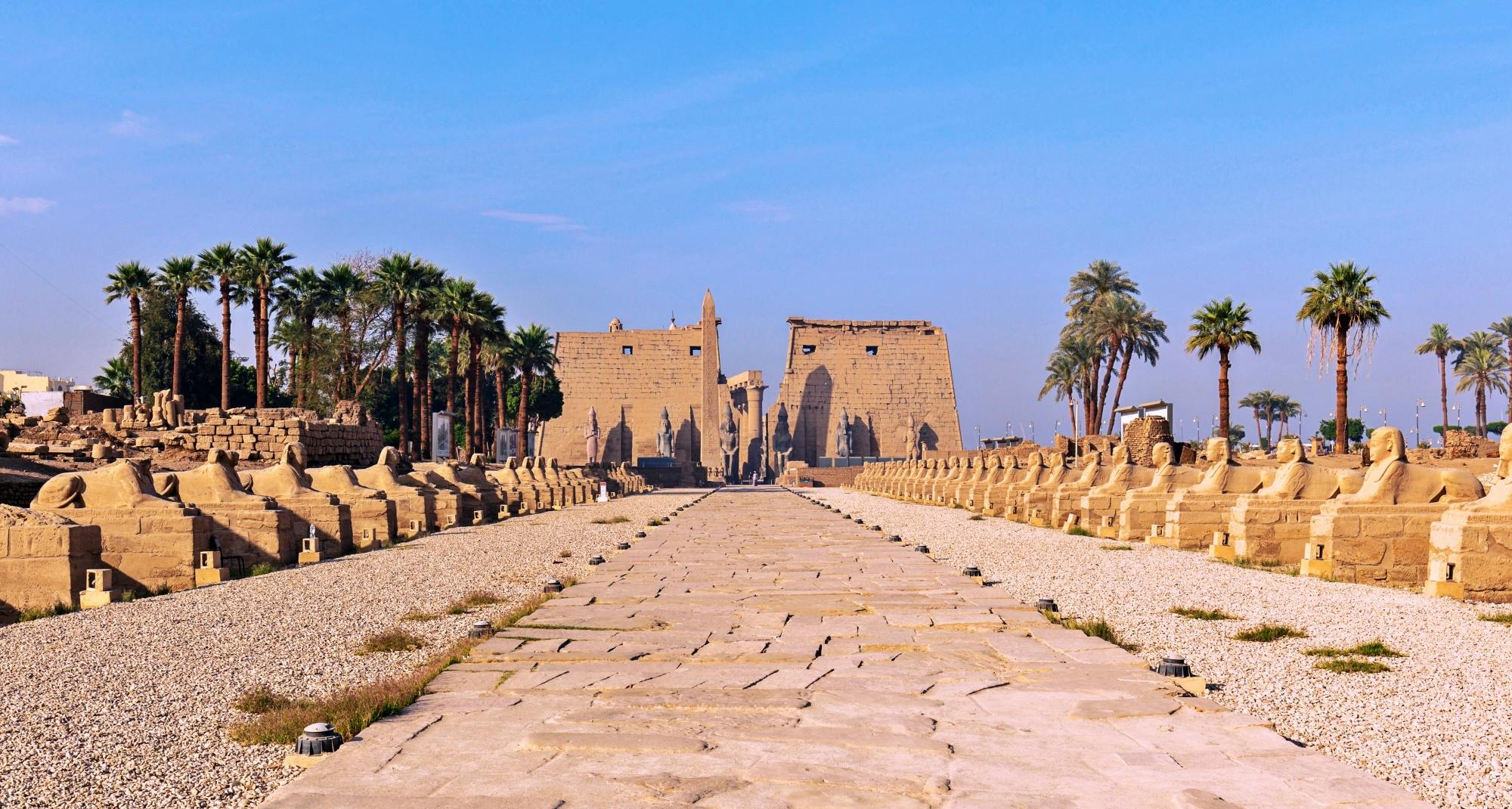
Avenue of Sphinxes: the restored ceremonial road connecting Karnak and Luxor Temple.
Luxor Museum: excellent for a focused look at ancient Theban artefacts.
Mummification Museum: useful for understanding ancient Egyptian burial beliefs and techniques.
Nile Corniche: good for evening walks, felucca rides and views across to the West Bank.
Local souks and cafés: best visited after the main temple touring is finished.
Best Things to See on Luxor’s West Bank
The West Bank is the heart of ancient Thebes’ necropolis. Here, tombs and temples are scattered across the desert edge, with cliffs rising behind them. It is best explored early in the morning before the heat builds.
Top West Bank highlights
Valley of the Kings: royal tombs of New Kingdom pharaohs, including the tomb of Tutankhamun.
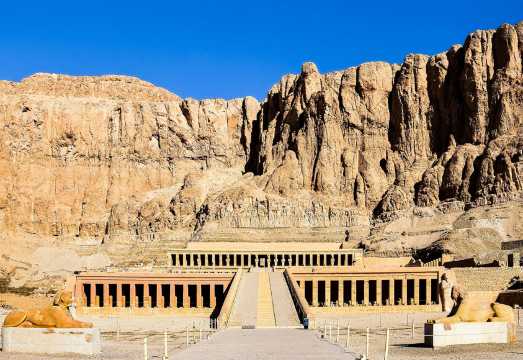
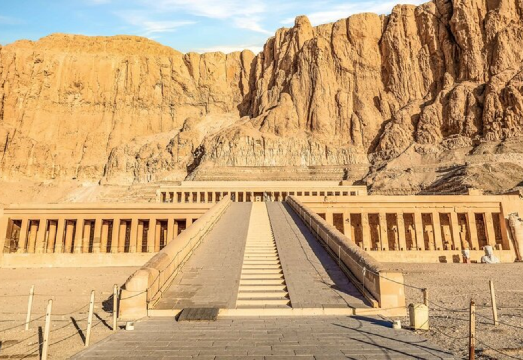
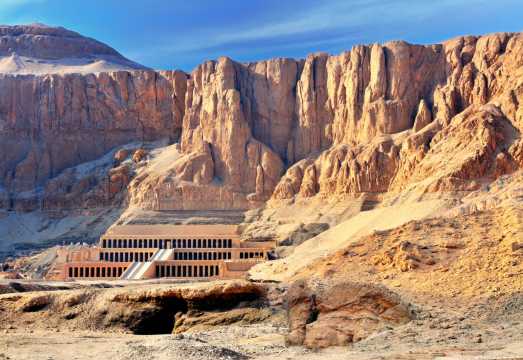
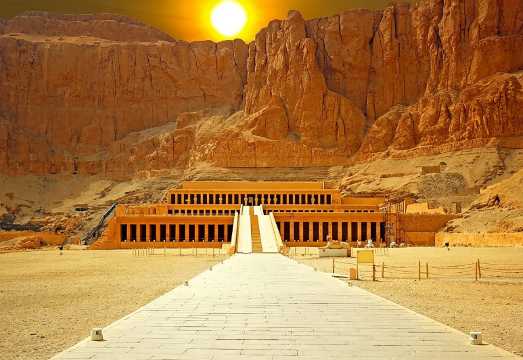
Temple of Hatshepsut: a grand terraced mortuary temple set beneath dramatic cliffs at Deir el-Bahari.
Colossi of Memnon: two enormous seated statues of Amenhotep III.
Valley of the Queens: tombs of royal women and princes, including the famous tomb of Queen Nefertari when open and ticketed.
Medinet Habu: the mortuary temple of Ramesses III, with impressive reliefs and walls.
Ramesseum: the mortuary temple of Ramesses II, known for ruins, columns and fallen colossal statues.
Deir el-Medina: the village and tombs of the workers who built the royal tombs.
Tombs of the Nobles: colourful private tombs with scenes of daily life, farming, music and banquets.
Karnak Temple
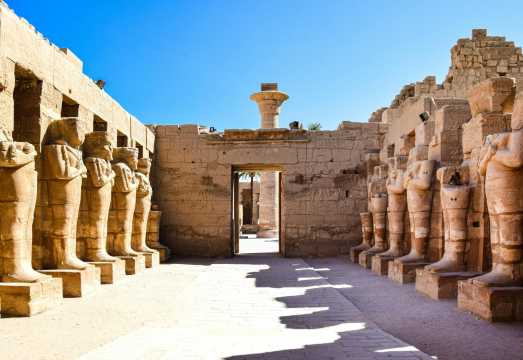
Karnak Temple is the great centrepiece of Luxor’s East Bank. It is not a single temple, but a vast religious complex built and expanded by many pharaohs over centuries. The site is most closely associated with Amun-Ra, the chief god of Thebes.
The most famous area is the Great Hypostyle Hall, a forest of enormous carved columns that feels overwhelming in scale. You can also see pylons, obelisks, sacred lakes, statues, chapels and processional routes.
Why visit Karnak?
It is one of Egypt’s most monumental temple complexes.
The Great Hypostyle Hall is unforgettable.
It gives context to Thebes’ religious and political power.
It connects historically with Luxor Temple via the Avenue of Sphinxes.
It is best visited with a guide who can explain the many layers of construction.
Karnak tips
Go early in the morning for cooler temperatures and fewer crowds.
Allow at least two hours, more if you love temples.
Bring water, hat and sun protection.
Use a guide if you want to understand the symbolism and pharaohs.
Stay for the Sound and Light Show only if you enjoy staged evening experiences.
Luxor Temple
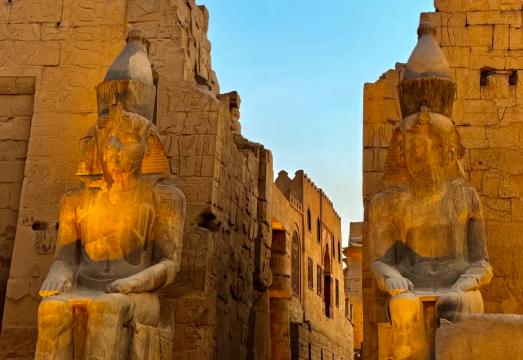
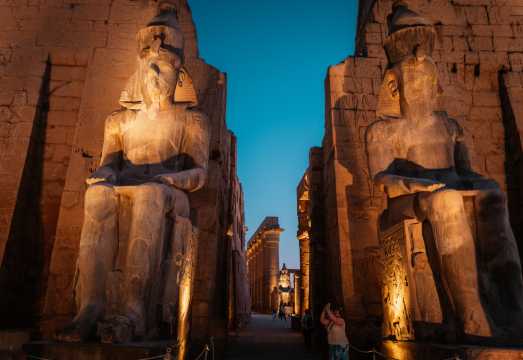
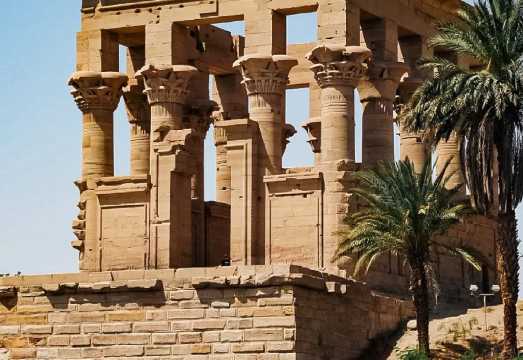
Luxor Temple sits in the centre of modern Luxor and is one of the easiest major Egyptian temples to visit. It is especially beautiful in the late afternoon and evening, when the stone glows and the lighting creates a dramatic atmosphere.
The temple was linked to royal and religious ceremonies, and it is closely connected with Karnak through the ancient processional route now known as the Avenue of Sphinxes. Unlike Karnak, which feels vast and sprawling, Luxor Temple feels more compact, elegant and urban.
Why visit Luxor Temple?
It is easy to reach from most East Bank hotels.
It is beautiful after sunset.
It combines ancient Egyptian, Roman, Christian and Islamic layers of history.
It pairs perfectly with Karnak Temple on the same day.
It is one of the best sites for atmospheric evening photography in Luxor.
Luxor Temple tips
Visit near sunset and stay into the evening if possible.
Combine with a Nile Corniche walk or dinner nearby.
Bring a camera or phone with good low-light settings.
Look for the mosque built into the temple area, showing the site’s long history.
Visit after Karnak for a natural East Bank temple sequence.
Avenue of Sphinxes
The Avenue of Sphinxes is the ancient processional road linking Karnak Temple and Luxor Temple. It is around 2.7 kilometres long and lined with sphinx statues, creating a ceremonial route through ancient Thebes.
Walking part of the route helps you understand how the East Bank temples were connected, not just as isolated monuments but as parts of a wider sacred city.
Why it matters
It physically connects Karnak and Luxor Temple.
It was used for ancient religious festivals and processions.
It adds structure to the East Bank sightseeing route.
It helps visitors visualise ancient Thebes as a living ceremonial city.
Valley of the Kings
The Valley of the Kings is the most famous site on Luxor’s West Bank. Hidden among the desert cliffs, it contains the tombs of New Kingdom pharaohs, including the famous tomb of Tutankhamun.
Most standard tickets allow entry to a selection of open tombs, while special tombs may require separate tickets. Tomb availability can change for conservation reasons, so check current options when you arrive.
Why visit the Valley of the Kings?
It is one of the world’s most important royal burial sites.
The painted tombs reveal ancient Egyptian beliefs about the afterlife.
It includes tombs of major New Kingdom rulers.
The desert setting is dramatic and atmospheric.
It is the essential West Bank site for most first-time visitors.
Valley of the Kings tips
Start early before the heat and tour buses arrive.
Check which tombs are open on the day.
Special tombs can cost extra, so budget accordingly.
Photography rules can change; check before taking photos.
Do not touch painted walls or lean on tomb surfaces.
Bring water, but do not eat inside tomb areas.
Wear shoes with good grip because some tombs have ramps and steps.
Temple of Hatshepsut
The Temple of Hatshepsut at Deir el-Bahari is one of Luxor’s most striking monuments. Its terraces rise beneath high limestone cliffs, creating a powerful architectural backdrop unlike any other major temple in Egypt.
Hatshepsut was one of ancient Egypt’s most successful female pharaohs, and her mortuary temple reflects both royal power and religious legitimacy. It is a visually dramatic site and one of the easiest West Bank monuments to recognise from photos.
Why visit Hatshepsut’s Temple?
The cliff setting is spectacular.
It is one of the most important monuments linked to a female pharaoh.
It pairs naturally with Valley of the Kings and Colossi of Memnon.
The terraces and colonnades make it highly photogenic.
It helps explain the mortuary temple tradition of the West Bank.
Hatshepsut Temple tips
Visit in the morning when the light is good and heat is lower.
Bring a hat because shade is limited.
Use the shuttle if available and useful for your mobility.
Look back across the plain for wide West Bank views.
Combine with Deir el-Medina or Valley of the Queens if you have extra time.
Colossi of Memnon
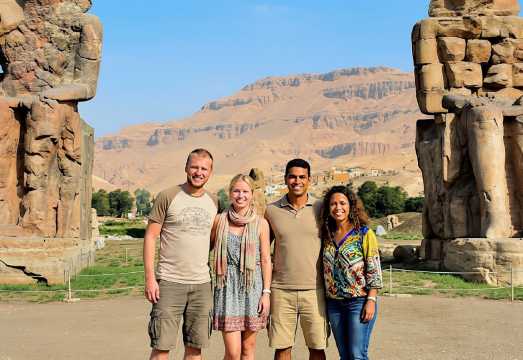
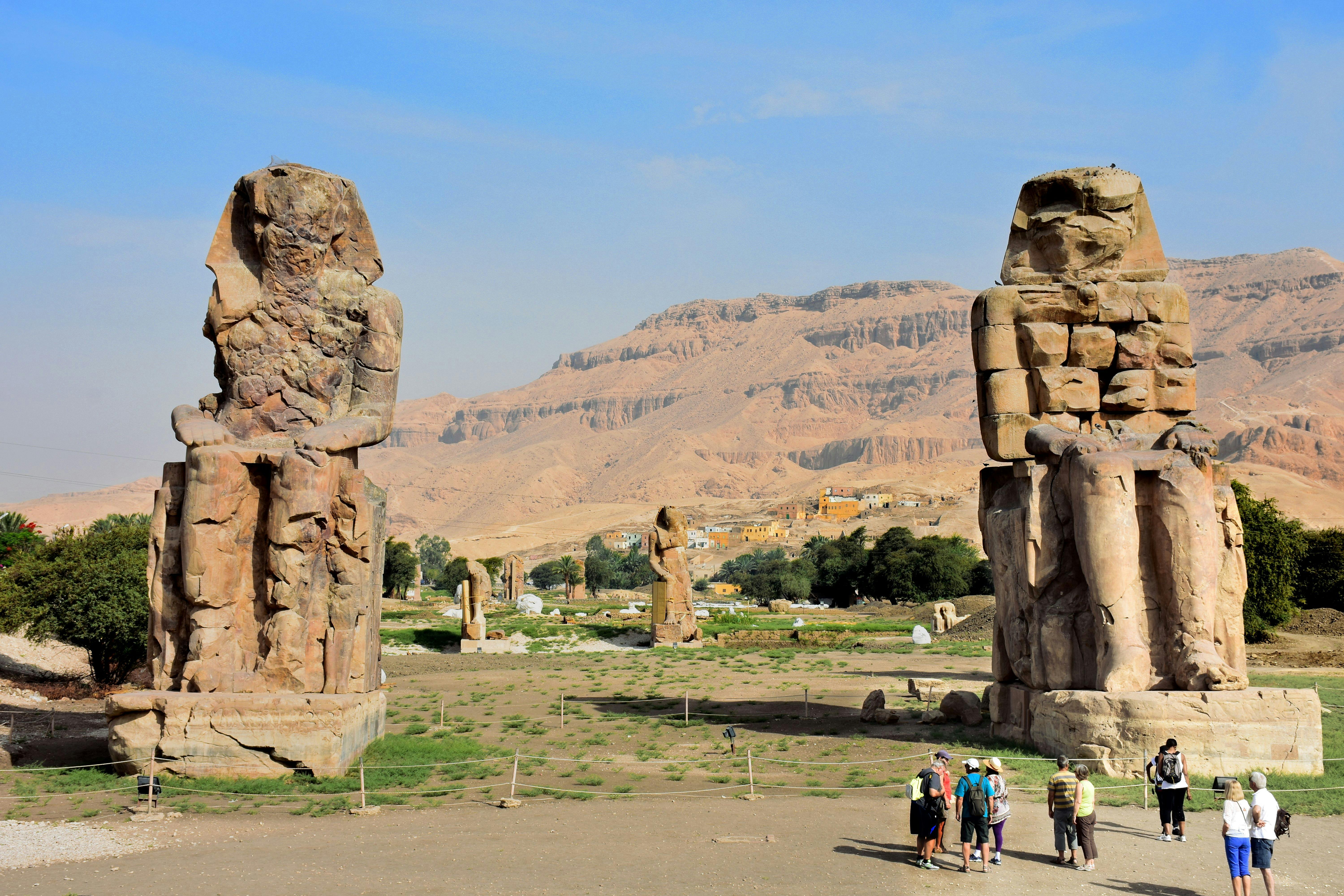
The Colossi of Memnon are two enormous seated statues of Pharaoh Amenhotep III on the West Bank. They once stood at the entrance to a vast mortuary temple, much of which is now ruined or under excavation.
Most tours stop here briefly because the statues are close to the road and easy to visit. They are free to view from the roadside area and make a strong introduction to the scale of West Bank monuments.
Why visit the Colossi of Memnon?
They are quick and easy to see on the way to other West Bank sites.
They show the scale of Amenhotep III’s original mortuary complex.
They are one of Luxor’s classic photo stops.
They are best combined with the Valley of the Kings and Hatshepsut Temple.
Other West Bank Sites Worth Visiting
Medinet Habu
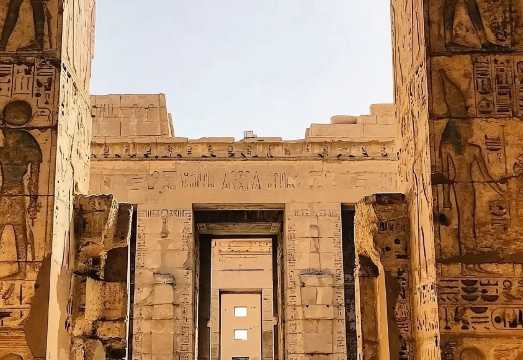
Medinet Habu is one of the best West Bank sites after the Valley of the Kings and Hatshepsut’s Temple. The mortuary temple of Ramesses III has impressive walls, reliefs, columns and quieter courtyards. It is often less crowded than the main tour stops.
Valley of the Queens
Valley of the Queens contains tombs of queens, princes and royal family members. The tomb of Queen Nefertari is one of Egypt’s most beautiful tombs when open, but it usually requires a special ticket and may have strict limits.
Ramesseum
The Ramesseum is the mortuary temple of Ramesses II. It is a rewarding stop for travellers who enjoy ruins, columns and quieter temple photography.
Deir el-Medina
Deir el-Medina was the village of the workers who built the royal tombs. Its tombs are smaller than royal tombs but can be very colourful and full of human detail.
Tombs of the Nobles
The Tombs of the Nobles show scenes from everyday life, agriculture, banquets and family life. They are excellent for travellers who want a broader view of ancient Egyptian society beyond pharaohs.
How to Cross Between Luxor’s East and West Bank
There are several ways to move between the East and West Bank, and the best option depends on your budget, time and comfort level.
Transport
Best For
Traveller Notes
Private car and driver
Comfort and efficient sightseeing
Best for West Bank day tours, especially in hot weather.
Guided tour
First-time visitors
Combines transport, historical explanation and efficient site order.
Public ferry
Budget travellers and independent visitors
Useful for crossing the Nile, then arranging transport on the West Bank.
Motorboat crossing
Flexible short crossings
Agree the price clearly before boarding.
Bicycle or e-bike
Active travellers on the West Bank
Can be enjoyable in cooler months, but avoid midday heat.
Taxi
Simple point-to-point travel
Negotiate or confirm fare before starting.
If you are visiting multiple West Bank sites in one day, a private car with driver or guided tour is usually the easiest option. Distances between sites are larger than they look, and the desert heat can make independent walking tiring.
Suggested Luxor East & West Bank Itineraries
Option 1: One Full Day in Luxor
Early morning: Valley of the Kings.
Mid-morning: Temple of Hatshepsut.
Late morning: Colossi of Memnon.
Afternoon: Karnak Temple.
Evening: Luxor Temple after sunset.
This is possible but rushed. It works best with a private guide and driver.
Option 2: Best Two-Day Luxor Plan
Day 1 East Bank: Karnak Temple in the morning, Luxor Museum in the afternoon, Luxor Temple at sunset or evening.
Day 2 West Bank: Valley of the Kings, Hatshepsut Temple, Colossi of Memnon and Medinet Habu.
This is the best basic plan for most visitors.
Option 3: Three-Day Luxor History Plan
Day 1: Karnak Temple, Avenue of Sphinxes and Luxor Temple.
Day 2: Valley of the Kings, Hatshepsut Temple, Colossi of Memnon and Medinet Habu.
Day 3: Valley of the Queens, Deir el-Medina, Tombs of the Nobles and Ramesseum.
This gives you time to see the famous sites and the quieter West Bank monuments.
Option 4: Luxor with Hot-Air Balloon
Before sunrise: Hot-air balloon over the West Bank if weather allows.
Morning: Valley of the Kings and Hatshepsut Temple.
Afternoon: Rest at hotel or take a Nile felucca ride.
Evening: Luxor Temple or dinner on the East Bank.
Option 5: Slow Travel Luxor
Day 1: Arrive, walk the Corniche and visit Luxor Temple at night.
Day 2: Karnak Temple and Luxor Museum.
Day 3: Valley of the Kings, Hatshepsut and Colossi of Memnon.
Day 4: Medinet Habu, Deir el-Medina and Valley of the Queens.
Day 5: Felucca ride, local markets, rest or day trip to Dendera and Abydos.
Best Time to Visit Luxor
Luxor is hot for much of the year, and the West Bank in particular can feel intense because many sites are exposed desert locations. The best time to visit is during the cooler months.
Season
What to Expect
Advice
October to April
Cooler weather and peak sightseeing season
Best overall time for temples and tombs.
December to February
Comfortable days, cooler evenings and more visitors
Book hotels and guides early.
March to April
Warm, bright and good for sightseeing, with possible dusty winds
Start early and carry water.
May to September
Very hot, especially on the West Bank
Tour at sunrise or early morning, then rest indoors.
Ramadan
Travel is possible, but local rhythms and opening patterns may differ
Check timing and meal arrangements in advance.
Where to Stay in Luxor
Area
Best For
Traveller Notes
East Bank near Luxor Temple
First-time visitors, restaurants and convenience
Best for easy access to temples, train station, Nile cruises and evening walks.
East Bank Nilefront
Comfort, views and classic hotel stays
Good for travellers who want pool time and organised tours.
West Bank village area
Quiet stays, budget guesthouses and slower travel
Good for independent travellers and early West Bank starts.
West Bank near archaeological sites
History lovers and photographers
Peaceful, but fewer evening dining options than the East Bank.
Nile cruise ship
Aswan-Luxor cruise travellers
Convenient if your cruise starts or ends in Luxor, but less flexible for slow exploration.
What to Wear and Bring
Light breathable clothing
Comfortable walking shoes
Sun hat or cap
Sunglasses
High-SPF sunscreen
Reusable water bottle
Small cash for toilets, tips and extras
Camera or phone with spare battery
Modest clothing for towns and local areas
Light jacket in winter evenings
Scarf or buff for dust and sun
Passport or ID if required for tickets or hotel check-in
Useful Booking Resources for Luxor East & West Bank Tours
Booking platforms are useful for comparing private guides, East Bank tours, West Bank day trips, hot-air balloon rides, Nile cruises, Dendera and Abydos excursions, airport transfers and multi-day Egypt itineraries. Skimlinks may automatically convert these merchant links into affiliate links if the merchant is active in your Skimlinks account.
GetYourGuide – offers Luxor East Bank tours, West Bank tours, Valley of the Kings trips, Karnak and Luxor Temple visits, hot-air balloon rides, Nile cruises and private guides.
Viator – offers private Luxor tours, East and West Bank combinations, Valley of the Kings, Hatshepsut Temple, Colossi of Memnon, Karnak, Luxor Temple and Dendera day trips.
Trip.com – useful for Luxor hotels, flights, train-friendly stays, Nile cruise connections and selected local activity listings.
Klook – offers Egypt activities, attraction tickets, transfers, eSIMs and selected Luxor travel products depending on availability.
KKday – offers Egypt tours, private transfers, cultural experiences and local activity products.
Musement – offers Egypt tours, attraction tickets, cultural activities and guided experiences.
Tiqets – useful for mobile-friendly attraction tickets and museum-style experiences in major destinations.
G Adventures – offers small-group Egypt tours that may include Cairo, Luxor, Aswan and Nile cruise sections.
TourRadar – useful for comparing multi-day Egypt tour packages that include Luxor’s East and West Bank.
Booking tip: Before booking a Luxor tour, check whether entrance fees are included, whether special tomb tickets are extra, whether the guide is a licensed Egyptologist, how early the tour starts, whether pickup is from the East Bank or West Bank, and how much time is allowed at each site.
Luxor East & West Bank Travel Tips
Start early on the West Bank
The West Bank gets hot quickly. Visit the Valley of the Kings first, then Hatshepsut Temple and Colossi of Memnon.
Visit Luxor Temple in the evening
Luxor Temple is one of Egypt’s best monuments after dark. The lighting gives it a completely different atmosphere from daytime visits.
Do Karnak with a guide
Karnak is huge and layered. A good guide helps you understand the complex instead of just walking through columns.
Do not overpack one day
Luxor sites are rich and tiring. Too many tombs and temples in one day can become overwhelming.
Carry small cash
Small notes are useful for toilets, tips, local ferries and small purchases.
Respect tomb rules
Do not touch walls, use flash where forbidden or ignore photography rules. Tomb preservation matters.
Use sun protection seriously
Even in winter, the sun can be strong. Hat, sunglasses and water are essential.
Check ticket inclusions
Some tombs require separate tickets. Ask before entering so there are no surprises.
Consider staying longer
Two days is good. Three or four days is much better if you love history.
Balance temples with Nile time
A felucca ride, sunset on the Corniche or quiet Nilefront dinner helps balance the intensity of tomb and temple touring.
Is Luxor’s East & West Nile Bank Worth Visiting?
Yes, Luxor’s East and West Nile Bank are absolutely worth visiting. Together, they form one of the greatest archaeological landscapes in the world. The East Bank gives you Karnak, Luxor Temple, museums and city life. The West Bank gives you royal tombs, mortuary temples, desert cliffs and the afterlife landscape of ancient Thebes.
It may not suit travellers who want a quick, effortless sightseeing stop. Luxor is hot, intense and historically dense. But if you give it time, start early and use a good guide for the major sites, it can be the most memorable part of an Egypt trip.
The best way to experience Luxor is to split your time properly: East Bank for temples and evenings, West Bank for tombs and sunrise starts, with the Nile as the beautiful dividing line between the world of the living and the world of the dead.
FAQs About Luxor’s East & West Nile Bank
What is on Luxor’s East Bank?
Luxor’s East Bank is home to Karnak Temple, Luxor Temple, the Avenue of Sphinxes, Luxor Museum, the Mummification Museum, hotels, restaurants, the train station and many Nile cruise docks.
What is on Luxor’s West Bank?
Luxor’s West Bank contains the Valley of the Kings, Temple of Hatshepsut, Colossi of Memnon, Valley of the Queens, Medinet Habu, the Ramesseum, Deir el-Medina and the Tombs of the Nobles.
Which is better, East Bank or West Bank Luxor?
Both are essential. The East Bank is best for temples and city convenience, while the West Bank is best for royal tombs, mortuary temples and desert scenery.
How many days do you need in Luxor?
Two full days is a good minimum: one for the East Bank and one for the West Bank. Three or four days is better if you want to visit extra tombs, museums and quieter temples.
Can you visit both banks in one day?
Yes, but it will feel rushed. A one-day visit usually includes Valley of the Kings, Hatshepsut Temple, Colossi of Memnon, Karnak Temple and Luxor Temple.
How do you cross from East Bank to West Bank in Luxor?
You can cross by bridge in a car, use the public ferry, take a motorboat or book a guided tour with transfers included.
Is the Valley of the Kings on the East or West Bank?
The Valley of the Kings is on Luxor’s West Bank, in the desert hills of the Theban necropolis.
Is Karnak Temple on the East or West Bank?
Karnak Temple is on Luxor’s East Bank, north of Luxor Temple.
When is the best time to visit Luxor?
October to April is the best period for sightseeing because temperatures are cooler. In hotter months, visit early in the morning and rest during the afternoon.
Is Luxor’s East & West Nile Bank worth visiting?
Yes. Luxor’s East and West Bank are among the most important ancient sites in Egypt, combining temples, royal tombs, mortuary monuments, museums and Nile scenery in one extraordinary destination.
Sponsored Popular Items
Quick take: Trip.com offers a worldwide selection of tours and attractions and hotels
Luxor East & West Bank : Valley of the Kings, Temple of Hatshepsut – Travel Experience Egypt Luxor East & West Bank : Valley of the Kings, Temple of Hatshepsut ,Colossi of Memnon adds structure, local context and purposeful sightseeing to the itinerary. Luxor East & West Bank : Valley of the Kings, Temple of Hatshepsut ,Colossi of Memnon: experience overview Begin at the Valley of the Kings, also known as the Valley of the Gates of the Kings; Continue to the Temple of Hatshepsut, an architectural masterpiece honoring Egypt's most powerful female ruler.;Visit the towering Colossi of Memnon Available from trip.com. This makes the experience a useful option when planning time in > Luxor City local…
1-day tour of Luxor's East Nile Bank & West Nile Bank – Guided Sightseeing Experience Egypt 1-day tour of Luxor's East Nile Bank & West Nile Bank adds structure, local context and purposeful sightseeing to the itinerary. 1-day tour of Luxor's East Nile Bank & West Nile Bank: experience overview Explore the highlights of ancient Luxor on a full-day tour of the east and west banks of the Nile.;Visit magnificent temples and royal tombs to discover the splendor of ancient Egypt;Delve into the region's history, culture, and extraordinary architecture, including the famous Valley of the Kings, Temple of Hatshepsut, and Karnak temple complex. Available from trip.com. This makes the experience a useful option when planning time…
Luxor East Bank Day Tour: Karnak, Luxor Museum, and Temple Night View – Guided Tour Egypt Luxor East Bank Day Tour: Karnak, Luxor Museum, and Temple Night View Experience adds structure, local context and purposeful sightseeing to the itinerary. Luxor East Bank Day Tour: Karnak, Luxor Museum, and Temple Night View Experience: experience overview Complimentary horse-drawn carriage tour experience at Luxor Temple. Explore the magnificent Karnak in depth during the morning, and admire the solemn night view of Luxor Temple under the lights in the evening.;Local Egyptian travel agency with 30 years of experience provides full-service private tour customization, one group per booking, with 24/7 support.;All-inclusive pricing with no hidden costs, no forced shopping, and no…
Luxor Day Tour To East and West Bank of the Nile – Guided Sightseeing Experience Egypt Luxor Day Tour To East and West Bank of the Nile adds structure, local context and purposeful sightseeing to the itinerary. Luxor Day Tour To East and West Bank of the Nile: experience overview Discover the top sights of Luxor on this full-day private tour;Smooth Transfer From Hotels ;Perfectly balanced itinerary covering Luxor's top attractions in one day Available from trip.com. This makes the experience a useful option when planning time in > Luxor local experienceSearch results. The listing describes this as a one day experience. Routes, start times, inclusions and meeting arrangements may vary, so the current booking page…
Classic 1-day Tour of Luxor West Bank & East Bank – Accommodation Egypt Classic 1-day Tour of Luxor West Bank + East Bank | Private Small Group · Hotel Pickup · Independent Exploration offers a hands-on way to engage with local skills or traditions. Classic 1-day Tour of Luxor West Bank + East Bank | Private Small Group · Hotel Pickup · Independent Exploration: experience overview Private tour for 2, with flexible private transfers, freely explore the core monuments on both the East and West Banks of Luxor. Enjoy a self-guided itinerary, no join-in tours, no shopping, for an in-depth experience of Egyptian civilization. Available from trip.com. This makes the experience a useful…
Discover Karnak Temple, the Sphinx Alley and Luxor Temple – Guided Tour Egypt Discover Karnak Temple, the Sphinx Alley and Luxor Temple is a convenient way to add structure, local context and purposeful sightseeing to the itinerary. Discover Karnak Temple, the Sphinx Alley and Luxor Temple: experience overview Experience the Discover Karnak Temple, the Sphinx Alley and Luxor Temple to explore the sanctuaries, kiosks, pylons, obelisks and marvel at a site that measures about 1.5km by 800m. This makes the experience a useful option when planning time in Luxor. The exact duration can depend on the selected date, option or operating schedule. Routes, start times, inclusions and meeting arrangements may vary, so the…
Quick take: Trip.com helps you compare prices across accommodations. Use it to shortlist hotels, then click through to confirm the final price, room type, and inclusions on the booking site.
Luxor : Full-Day Tour visit East and West Nile Banks "Walk into – Guided Tour Egypt Luxor : Full Day Tour visit East and West Nile Banks "Walk into history " adds structure, local context and purposeful sightseeing to the itinerary. Luxor : Full Day Tour visit East and West Nile Banks "Walk into history ": experience overview Discover the Heart of Ancient Egypt on a Private 8-Hour Adventure Available from trip.com. This makes the experience a useful option when planning time in > Luxor local experienceSearch results. The listing describes this as a full day experience. Routes, start times, inclusions and meeting arrangements may vary, so the current booking page should be treated as the…
Full-Day East and West Bank Tour in Luxor, Egypt – Accommodation Egypt One-Day East and West Bank Tour in Luxor, Egypt [Departing from Hurghada] with Hotel Pickup and Drop-off in Luxor adds structure, local context and purposeful sightseeing to the itinerary. One-Day East and West Bank Tour in Luxor, Egypt [Departing from Hurghada] with Hotel Pickup and Drop-off in Luxor: experience overview [Attractions] Valley of the Kings/Mortuary Temple of Hatshepsut/Luxor Temple/Karnak/Colossi of Memnon/Nile cruise; [No Shopping Pure Play] Official vehicles, licensed travel agency, no sales pitches, no hidden costs, butler-style service for a delightful journey.;Fully Customized Private Tour + Hotel Transfer + Experienced Local Driver-Guide + Optional Drop-off in Luxor or Aswan.…
Private Day Tour to the East and West Bank of Luxor – Guided Sightseeing Experience Egypt Private Day Tour to the East and West Bank of Luxor adds structure, local context and purposeful sightseeing to the itinerary. Private Day Tour to the East and West Bank of Luxor: experience overview East Bank Highlights: Explore Luxor Temple and the vast Karnak Temple Complex, famous for their towering columns, statues, and rich history.;West Bank Treasures: Discover the Valley of the Kings, where pharaohs like Tutankhamun and Ramses II were laid to rest.;Iconic Monuments: Visit Queen Hatshepsut's impressive cliffside mortuary temple and the colossal statues of Amenhotep III. Available from trip.com. This makes the experience a useful option when…
Full-Day East and West Bank tour with lunch from Luxor – Guided Sightseeing Experience Full-day East and West Bank tour with lunch from Luxor explores the destination through flavour and regional customs. Full-day East and West Bank tour with lunch from Luxor: experience overview Visit the Valley of the Kings and learn about the greatest mummy found in history;Discover top sites in 1 day such as Sphinx Alley and the River Nile by motorboat;Marvel at 60-foot stone statues that have stood for more than 3,000 years Available from trip.com. This makes the experience a useful option when planning time in > Luxor local experienceSearch results. The listing describes this as a full-day experience. Routes,…
Full-Day East and West Bank Tour with Lunch from Luxor Egypt Full-day East and West Bank tour with lunch from Luxor explores the destination through flavour, regional customs and the stories connected with food or drink. Full-day East and West Bank tour with lunch from Luxor: experience overview Experience the guided tour of Luxor West and East Bank with lunch to see Valley of the Kings, Karnak Temple, Sphinx Alley, the River Nile by motorboat, and much more. This makes the experience a useful option when planning time in Luxor. The listing describes this as a full-day experience. Routes, start times, inclusions and meeting arrangements may vary, so the current booking…
Luxor East & West Bank Pure Play Tour with Private Vehicle, Small-Group – Attraction Entry Egypt Luxor East & West Bank Pure Play Tour with Private Vehicle, Small Group, Including Transfer, Lunch, Admission Ticket, Gratuities, and Guide explores the destination through flavour and regional customs. Luxor East & West Bank Pure Play Tour with Private Vehicle, Small Group, Including Transfer, Lunch, Admission Ticket, Gratuities, and Guide: experience overview Karnak: A vast temple complex of ancient Egypt, featuring hundreds of colossal stone pillars adorned with exquisite relief carvings.;Valley of the Kings: The Eternal Resting Place of Pharaohs;Optional Chinese/English guide services. Each package is for an independent group without combining with others. Available from trip.com. This makes the…
Quick take: Trip.com helps you compare prices across accommodations. Use it to shortlist hotels, then click through to confirm the final price, room type, and inclusions on the booking site.