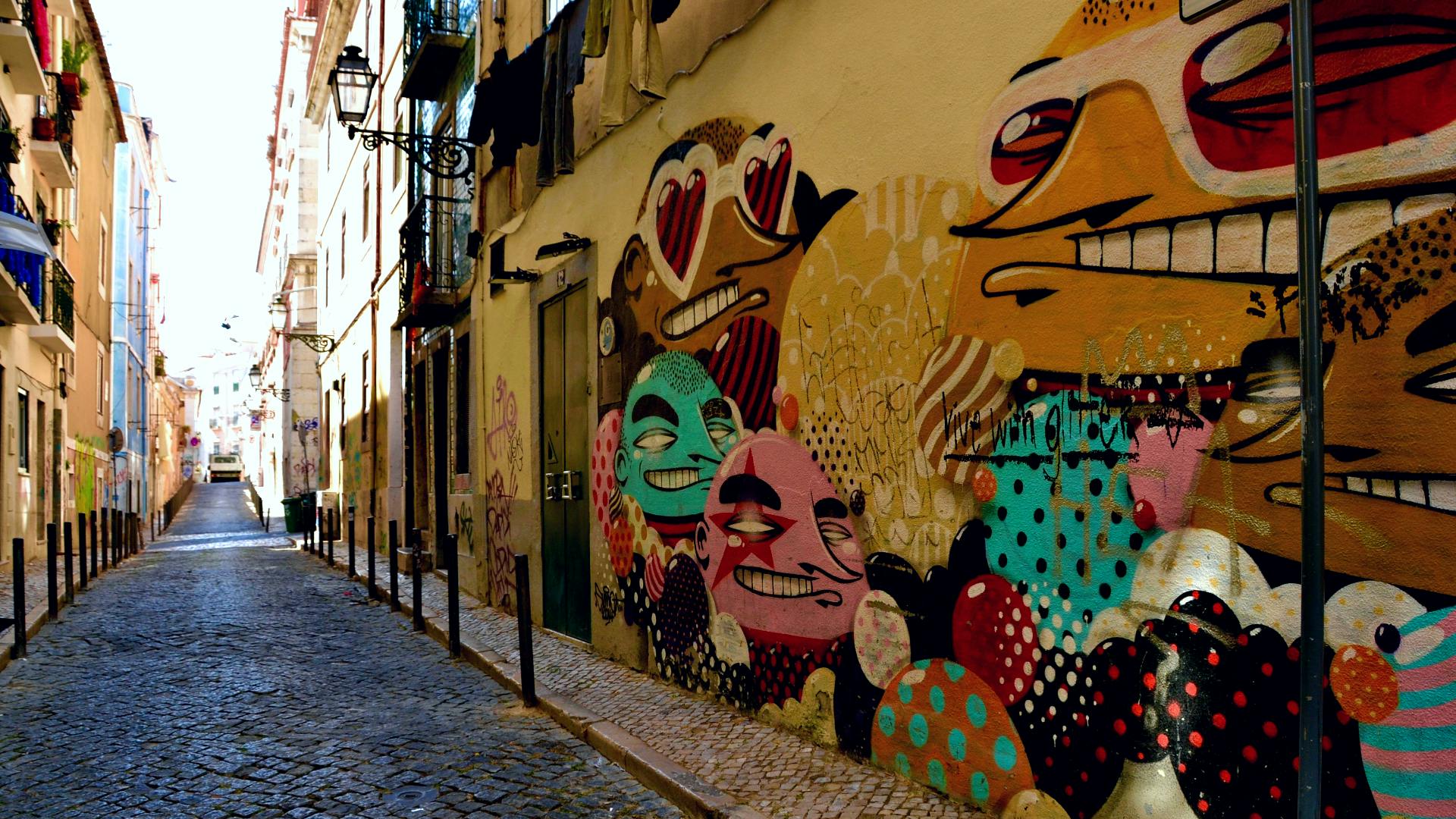
Lisbon Old Town is not one single walled district. It is a layered historic centre made up of atmospheric neighbourhoods such as Alfama, Baixa, Chiado, Bairro Alto, Mouraria, Graça and the riverfront around Praça do Comércio. Together, these areas reveal the Lisbon travellers dream of: tiled façades, yellow trams, steep lanes, miradouros, fado music, grand squares, old churches, cafés, azulejos, river views and everyday neighbourhood life.
Lisbon’s historic centre is best explored slowly. You can ride Tram 28 through narrow streets, climb to São Jorge Castle, listen to fado in Alfama, shop in Chiado, photograph the Santa Justa Lift, walk through the Pombaline grid of Baixa, and end the evening in Bairro Alto or at a sunset viewpoint overlooking the Tagus River.
This is a city where the streets are part of the attraction. Some of the best moments are not inside museums, but in tiled doorways, tiny staircases, laundry-hung alleys, old grocery shops, church bells, tram bells and sudden views across red rooftops to the water.
Quick take: Musement.com offers a worldwide selection of tours and attractions
Discovery Game Lisbon’s Alfama and Baixa Outdoor Art – Self-Guided Experience Portugal Discovery Game Lisbon’s Alfama and Baixa outdoor art is a convenient way to add structure, local context and purposeful sightseeing to the itinerary. Check current availability, inclusions and booking details before you go.
Why Visit Lisbon Old Town?
Lisbon Old Town is worth visiting because it combines beauty, history, culture and atmosphere in a very walkable area. Unlike cities where historic sights are spread far apart, Lisbon’s old centre lets you move from medieval lanes to grand 18th-century squares, hilltop viewpoints, riverfront promenades, shopping streets and nightlife districts in a single day.
Alfama gives you the older, maze-like Lisbon of steep lanes and fado houses. Baixa gives you elegant post-earthquake planning and wide streets. Chiado gives you cafés, theatres, bookshops and shopping. Bairro Alto gives you nightlife, restaurants and bars. Mouraria and Graça add local character, multicultural food, viewpoints and a less polished but very real Lisbon feel.
Lisbon Old Town is best for:
First-time visitors to Lisbon
Travellers who love walking, photography and historic streets
Couples looking for romantic viewpoints and atmospheric evenings
Food lovers interested in pastel de nata, seafood, petiscos and Portuguese wine
Music lovers wanting to hear fado in Alfama or Bairro Alto
Architecture fans interested in azulejos, churches, squares and Pombaline planning
Visitors who want easy access to trams, metro stations, riverfront walks and day trips
Where Is Lisbon Old Town?
Lisbon Old Town covers the historic heart of the city near the Tagus River. The most useful orientation point is Praça do Comércio, the grand riverfront square at the southern edge of Baixa. From there, Baixa rises north toward Rossio, Alfama climbs east toward São Jorge Castle, and Chiado and Bairro Alto rise west up the hill.
Area
Best For
Traveller Notes
Alfama
Fado, old lanes, viewpoints, castle access
One of Lisbon’s most atmospheric historic districts.
Baixa
Grand squares, shopping streets, easy navigation
The flatter central district rebuilt after the 1755 earthquake.
Chiado
Cafés, theatres, boutiques, bookshops
Elegant and central, between Baixa and Bairro Alto.
Bairro Alto
Nightlife, restaurants, bars, fado
Quiet by day, lively after dark.
Mouraria
Local character, multicultural food, fado history
Less polished but very interesting for repeat visitors.
Graça
Viewpoints and local neighbourhood atmosphere
Good for sunset views and a slower Lisbon feel.
Cais do Sodré
Riverfront, nightlife, Time Out Market, transport
Useful for ferries, trains and evening food stops.
Best Historic Neighbourhoods in Lisbon Old Town
Alfama
Alfama is the most romantic and old-world part of Lisbon. Its narrow lanes climb from the river toward São Jorge Castle, passing tiny squares, tiled houses, stairways, fado restaurants, churches and viewpoints. It is easy to get lost here, and that is part of the charm.
Baixa
Baixa is Lisbon’s downtown grid, rebuilt after the devastating 1755 earthquake. It is flatter and easier to navigate than Alfama or Bairro Alto, with elegant streets, shops, cafés and squares such as Rossio, Praça da Figueira and Praça do Comércio.
Chiado
Chiado is refined, literary and stylish. It is known for cafés, bookshops, theatres, boutiques and classic Lisbon elegance. It connects Baixa with Bairro Alto and is a good area for shopping, coffee and people-watching.
Bairro Alto
Bairro Alto is quiet during the day but comes alive at night. Its narrow streets fill with restaurants, bars and fado houses. It is one of the best areas for an evening meal or casual drinks, though it can be noisy if you stay directly in the nightlife zone.
Mouraria
Mouraria is one of Lisbon’s most culturally layered neighbourhoods. It is linked with fado history and has a strong multicultural food scene. The streets feel more local than polished, making it a rewarding area for curious travellers.
Graça
Graça sits above Alfama and Mouraria and is loved for its viewpoints. It has a neighbourhood feel, with cafés, tiled buildings, local shops and some of Lisbon’s best sunset views.
Best Things to See in Lisbon Old Town
São Jorge Castle
São Jorge Castle sits high above Lisbon and offers some of the best views over the red rooftops, Baixa grid and Tagus River. It is one of the strongest orientation points for understanding the city.
Praça do Comércio
Praça do Comércio is Lisbon’s grand riverfront square. With its yellow arcades, triumphal arch and open views toward the Tagus, it is one of the best places to begin or end a walk through the old town.
Rossio Square
Rossio is one of central Lisbon’s most important squares, known for its wave-pattern paving, fountains, cafés and lively city-centre atmosphere.
Santa Justa Lift
The Santa Justa Lift connects Baixa with the higher Carmo and Chiado area. It is both a transport feature and a historic landmark, with views over the city from the upper level.
Carmo Convent
Carmo Convent is one of Lisbon’s most moving ruins. Its roofless Gothic arches remain as a reminder of the 1755 earthquake and now create one of the city’s most atmospheric historic sites.
Lisbon Cathedral
Lisbon Cathedral, often called the Sé, is one of the city’s oldest and most important churches. It sits between Baixa and Alfama and is a natural stop on a walk toward the castle.
Miradouro de Santa Luzia
Miradouro de Santa Luzia is a beautiful viewpoint overlooking Alfama and the river. It is known for tiled panels, bougainvillea, arches and classic Lisbon views.
Miradouro da Senhora do Monte
Miradouro da Senhora do Monte offers one of the widest views across Lisbon. It is especially good around sunset, though it requires a climb or transport up to Graça.
Elevador da Bica
The Bica funicular is one of Lisbon’s most photographed transport scenes, climbing a steep street between Cais do Sodré and Bairro Alto.
Rua Augusta
Rua Augusta is Baixa’s main pedestrian shopping street, running between Rossio and Praça do Comércio through the Arco da Rua Augusta.
Best Lisbon Old Town Walking Routes
Route 1: Baixa to Alfama and the Castle
This is the classic first-time Lisbon walk. Start at Praça do Comércio, walk through Baixa, visit Lisbon Cathedral, climb into Alfama, stop at Miradouro de Santa Luzia and continue to São Jorge Castle.
Best for: first-time visitors, history and viewpoints
Time needed: 3 to 4 hours with stops
Difficulty: moderate because of steep hills
Route 2: Baixa, Chiado and Bairro Alto
Start at Rossio, walk through Baixa, ride or walk up toward Chiado, visit Carmo Convent, browse shops and cafés, then continue into Bairro Alto for dinner or drinks.
Best for: shopping, cafés, nightlife and easy central sightseeing
Time needed: 2 to 4 hours
Difficulty: moderate, with some hills
Route 3: Mouraria and Graça Viewpoint Walk
Begin near Martim Moniz, explore Mouraria’s lanes and food spots, then climb toward Graça and Miradouro da Senhora do Monte. Continue downhill into Alfama if you still have energy.
Best for: local character, food, fado history and views
Time needed: 3 hours
Difficulty: steep in sections
Route 4: Lisbon Night Walk
Start with sunset at a viewpoint, eat dinner in Alfama, Chiado or Bairro Alto, then enjoy fado or a relaxed evening drink. Stick to well-lit, busy streets if walking late.
Best for: couples, food lovers and atmosphere
Time needed: 3 to 5 hours
Difficulty: easy to moderate depending on route
Tram 28 and Historic Transport
Tram 28 is Lisbon’s most famous tram route and one of the classic ways to experience the old town. It passes through several historic districts, including Alfama, Baixa, Estrela and Graça, using vintage yellow trams that squeeze through narrow streets and climb steep hills.
It is scenic, but it is also very popular. Expect queues, crowds and pickpocket risk during peak times. For a more comfortable ride, board early in the morning or consider riding only part of the route rather than treating it as a full sightseeing tour.
Other useful historic transport
Santa Justa Lift – connects Baixa with Carmo and Chiado.
Bica Funicular – one of Lisbon’s most photogenic steep-street lifts.
Glória Funicular – connects Restauradores with Bairro Alto.
Lavra Funicular – one of the quieter historic lifts.
Metro – useful for reaching the old centre quickly from other areas.
Ferries from Cais do Sodré – good for views back toward Lisbon from across the river.
Food, Fado and Local Culture in Lisbon Old Town
Lisbon Old Town is one of the best areas for traditional Portuguese food, cafés, wine bars and fado music. Alfama and Bairro Alto are especially associated with fado houses, while Baixa and Chiado offer a wide range of cafés, bakeries, restaurants and historic dining rooms.
Foods and drinks to try
Pastel de nata – the famous Portuguese custard tart.
Bacalhau – salted cod, cooked in many different ways.
Sardines – especially popular during festival season.
Petiscos – Portuguese small plates, similar in spirit to tapas.
Bifana – pork sandwich, simple and satisfying.
Ginjinha – cherry liqueur often served in tiny bars around Baixa and Rossio.
Portuguese wine – try vinho verde, Douro reds or local Lisbon-region wines.
Seafood rice – rich, comforting and good for a longer meal.
Fado tips
Fado is deeply connected to Lisbon’s old neighbourhoods, especially Alfama and Mouraria. Choose a reputable fado house, check whether dinner is included, and expect a listening atmosphere rather than background music. During performances, keep conversation low and avoid flash photography.
Best Viewpoints in Lisbon Old Town
Viewpoint
Best For
Traveller Notes
Miradouro de Santa Luzia
Alfama rooftops, tiles and river views
Beautiful but popular; go early or late.
Miradouro das Portas do Sol
Classic Alfama panorama
Close to Santa Luzia and easy to combine.
Miradouro da Senhora do Monte
Wide city views and sunset
One of Lisbon’s best panoramic viewpoints.
São Jorge Castle
Historic setting and rooftop views
Ticketed but excellent for orientation.
Santa Justa Lift viewpoint
Baixa grid and Carmo views
Can be busy; check ticket and queue options.
Miradouro de São Pedro de Alcântara
Castle view from Bairro Alto side
Good before dinner or nightlife in Bairro Alto.
Suggested Lisbon Old Town Itinerary Ideas
Option 1: Classic One-Day Lisbon Old Town Route
Morning: Start at Praça do Comércio and walk through Baixa.
Late morning: Visit Lisbon Cathedral and climb into Alfama.
Midday: Stop at Miradouro de Santa Luzia or Portas do Sol.
Afternoon: Visit São Jorge Castle or explore Alfama’s lanes.
Evening: Eat dinner in Alfama and listen to fado.
Option 2: Baixa, Chiado and Bairro Alto Day
Morning: Explore Rossio, Rua Augusta and Praça do Comércio.
Lunch: Eat in Baixa or Chiado.
Afternoon: Visit Carmo Convent and browse Chiado shops.
Sunset: Go to Miradouro de São Pedro de Alcântara.
Night: Have dinner or drinks in Bairro Alto.
Option 3: Tram 28 and Viewpoints Route
Early morning: Ride Tram 28 before the biggest crowds.
Mid-morning: Get off near Graça or Alfama.
Late morning: Walk to Senhora do Monte viewpoint.
Afternoon: Explore Alfama, Mouraria or the castle area.
Option 4: Food and Fado Evening
Late afternoon: Walk through Alfama or Mouraria.
Sunset: Stop at a viewpoint overlooking the river.
Dinner: Book a fado restaurant in Alfama or Bairro Alto.
Night: Walk back carefully through main streets or take a taxi.
Option 5: Two-Day Lisbon Old Town Plan
Day 1: Baixa, Alfama, castle, cathedral and fado.
Day 2: Chiado, Carmo Convent, Bairro Alto, viewpoints, Cais do Sodré and riverfront.
Where to Stay in Lisbon Old Town
Area
Best For
Traveller Notes
Baixa
First-time visitors, flat streets, easy transport
Very convenient and central.
Chiado
Couples, shopping, restaurants, elegance
Excellent location but often more expensive.
Alfama
Atmosphere, fado, historic charm
Beautiful but hilly; check luggage access.
Bairro Alto
Nightlife and dining
Can be noisy at night; choose carefully.
Graça
Viewpoints and local feel
Good for slower stays but hillier.
Cais do Sodré
Transport, riverfront, nightlife
Useful for trains to Cascais and ferries.
Useful Booking Resources for Lisbon Old Town Tours and Activities
Lisbon Old Town is easy to explore independently, but guided walks, food tours, fado experiences, tram tours and skip-the-line tickets can add useful context. The suppliers below are useful places to compare tour styles, inclusions and cancellation rules. Skimlinks may automatically convert these merchant links into affiliate links if the merchant is active in your Skimlinks account.
GetYourGuide – offers Lisbon Old Town walking tours, Alfama and Baixa tours, fado shows, food tours, Tram 28-style experiences, São Jorge Castle tickets and day trips from Lisbon.
Viator – offers private Lisbon city tours, Alfama walking tours, food and wine experiences, fado nights, tuk-tuk tours, river cruises and customisable old town itineraries.
Klook – offers Lisbon attraction tickets, city passes, guided activities, transport products, SIM/eSIM options and Portugal travel add-ons.
KKday – offers Lisbon tours, attraction tickets, transfers, local experiences and wider Portugal travel products depending on current availability.
Tiqets – offers mobile-friendly tickets for Lisbon attractions, museums, castles, viewpoints and cultural experiences.
Musement – offers Lisbon city tours, food tours, fado experiences, attraction tickets and day trips across Portugal.
G Adventures – offers small-group and multi-day Portugal tours that may include Lisbon as part of a broader itinerary.
Go City – offers bundled attraction passes in selected destinations, useful for readers comparing multi-attraction city sightseeing options.
CityPASS – offers bundled attraction passes mainly for selected North American cities. It is not a main Lisbon booking option, but may suit readers planning wider international travel.
Booking tip: Before booking a Lisbon Old Town tour, check whether it includes Alfama, Baixa, Chiado, Bairro Alto, São Jorge Castle, fado, food tastings, Tram 28, guide language, hotel pickup, entry tickets, hill difficulty, cancellation rules and exact meeting point.
Lisbon Old Town Travel Tips
Wear proper walking shoes
Lisbon’s old streets are steep, cobbled and slippery in places. Comfortable shoes with grip make a big difference.
Start early in Alfama
Alfama is most atmospheric in the morning before the biggest walking tours and tram crowds arrive.
Be careful on Tram 28
Tram 28 is scenic but crowded. Watch bags and phones carefully, especially during busy periods.
Use viewpoints as route markers
Lisbon’s miradouros are perfect rest stops. Plan your walks from viewpoint to viewpoint rather than rushing uphill without breaks.
Do not overpack your first day
The old town looks compact, but hills slow everything down. Choose two or three neighbourhoods per day rather than trying to see everything.
Book fado ahead
Good fado houses can fill, especially on weekends. Book ahead and confirm whether dinner is included.
Use public transport strategically
Take the metro, trams, funiculars or taxis uphill, then walk down. This saves energy and makes sightseeing more enjoyable.
Carry small cash
Cards are widely accepted, but small cash is useful for kiosks, tips, old bars, public toilets and small purchases.
Watch for uneven pavements
Portuguese calçada paving is beautiful but can be uneven. Take extra care at night or in wet weather.
Stay central if it is your first visit
Baixa, Chiado and Alfama are the most convenient old town bases for first-time visitors.
Is Lisbon Old Town Worth Visiting?
Yes, Lisbon Old Town is absolutely worth visiting. It is the heart of the city and the best place to experience Lisbon’s history, hills, viewpoints, trams, fado, food and tiled architecture.
It may not suit travellers who dislike hills or crowds, especially in peak season, but careful planning makes it much easier. Start early, use public transport for steep climbs and explore beyond the busiest streets.
The best way to enjoy Lisbon Old Town is to walk slowly, choose a few neighbourhoods at a time, pause at viewpoints, eat local food, listen to fado and leave space for wandering. Lisbon rewards curiosity more than strict sightseeing checklists.
FAQs About Lisbon Old Town
What is considered Lisbon Old Town?
Lisbon Old Town usually refers to the historic central districts including Alfama, Baixa, Chiado, Bairro Alto, Mouraria, Graça and the riverfront around Praça do Comércio.
Which is the oldest part of Lisbon?
Alfama is often considered one of Lisbon’s oldest and most atmospheric neighbourhoods, with narrow lanes, steep stairways, old churches, fado houses and views over the Tagus River.
Is Lisbon Old Town walkable?
Yes, Lisbon Old Town is walkable, but it is very hilly. Baixa is relatively flat, while Alfama, Bairro Alto, Graça and the castle area involve steep climbs.
Is Tram 28 worth riding?
Tram 28 can be worth riding because it passes through classic historic districts, but it is often crowded. Ride early or use it for a short section rather than relying on it for the whole day.
Where should first-time visitors stay in Lisbon Old Town?
Baixa is the easiest area for first-time visitors because it is central and flatter. Chiado is stylish and convenient, while Alfama is best for atmosphere and fado.
What is the best viewpoint in Lisbon Old Town?
Miradouro da Senhora do Monte offers one of the widest city views, while Santa Luzia and Portas do Sol are classic viewpoints over Alfama and the Tagus River.
Can you visit Lisbon Old Town in one day?
Yes, you can see highlights in one day, but two days is better. Spend one day on Baixa and Alfama, then another on Chiado, Bairro Alto, Mouraria and viewpoints.
Is Lisbon Old Town safe at night?
Most central areas are busy and generally comfortable for visitors, but use normal city precautions. Watch belongings, avoid dark empty lanes late at night and take a taxi if unsure.
What should you eat in Lisbon Old Town?
Try pastel de nata, bacalhau, sardines, bifanas, petiscos, seafood rice, Portuguese wine and ginjinha.
Is Lisbon Old Town worth visiting?
Yes. Lisbon Old Town is the best place to experience the city’s historic streets, trams, viewpoints, food, fado, tiled façades and river views.
Sponsored Popular Items
Quick take: Musement.com offers a worldwide selection of tours and attractions
Discovery Game Lisbon’s Alfama and Baixa Outdoor Art – Self-Guided Experience Portugal Discovery Game Lisbon’s Alfama and Baixa outdoor art is a convenient way to add structure, local context and purposeful sightseeing to the itinerary. Check current availability, inclusions and booking details before you go.
Discovery Game Lisbon’s Bairro Alto and Bica – Self-Guided Experience Portugal Discovery Game Lisbon’s Bairro Alto and Bica is a convenient way to add structure, local context and purposeful sightseeing to the itinerary. Check current availability, inclusions and booking details before you go.
Lisbon Bairro Alto Evening Food & Wine Tour – Food & Drink Experience Portugal Dine around Lisbon: Bairro Alto evening food and wine USD adds structure, local context and purposeful sightseeing to the itinerary. Check current availability, inclusions and booking details before you go.
Alvar Alto Exhibition Tickets at the Serralves Museum Portugal Alvar Alto Exhibition Tickets at the Serralves Museum provides a structured way to visit a notable attraction or cultural site. Check current availability, inclusions and booking details before you go.
Lisbon Hop-On Hop-Off Bus Tickets & Sightseeing Routes Portugal Lisbon combines hilltop viewpoints, tiled streets, waterfront monuments, neighbourhood food, fado and easy trips to Sintra, Cascais and the Tagus estuary. Check current availability, inclusions and booking details before you go.
From Phuket: ATV Scenic Routes with Karon and Patong Views Thailand Explore Phuket's best ATV adventure. Ride solo or with a passenger on Patong Hill, through lush plantations with views of Patong and Karon Beaches. Flexible times and round-trip transfers
West and East Berlin 2 Routes Hop-on Hop-off Bus Tour Germany Plan West and East Berlin 2 Routes Hop-on Hop-off Bus Tour, a guided sightseeing experience, with practical tips on timing, inclusions and what to check before booking. Compare current availability, prices and booking conditions before you go.