Diocletian’s Palace is one of the most extraordinary historic places in Croatia. Set in the centre of Split on the Dalmatian Coast, this ancient Roman palace is not a quiet ruin behind museum ropes. It is a living part of the city, filled with stone lanes, cafés, apartments, courtyards, shops, churches, restaurants, music and everyday life.
Quick take: Musement.com offers a worldwide selection of tours and attractions
Split Old City and Diocletian's Palace Guided Walking Tour Croatia Split old city and Diocletian's Palace guided walking tour is a convenient way to add structure, local context and purposeful sightseeing to the itinerary. Check current availability, inclusions and booking details before you go.
Built for the Roman Emperor Diocletian at the turn of the 4th century, the palace later became the foundation of Split’s Old Town. Today, visitors can walk through Roman gates, stand in the Peristyle, explore underground cellars, climb the bell tower of the Cathedral of Saint Domnius and wander through streets where ancient walls blend into modern city life.
Why Visit Diocletian’s Palace?
Diocletian’s Palace is worth visiting because it is one of the rare ancient sites where history still feels alive. Rather than being a single monument, it is a whole neighbourhood built inside and around Roman walls.
Within a short walk, you can see imperial architecture, medieval churches, Venetian-style details, ancient columns, hidden courtyards, lively squares and the waterfront Riva promenade. It is one of the best places in Europe to experience how a Roman structure can evolve into a modern city centre.
A Roman Palace That Became a City
Diocletian’s Palace was built as a retirement residence for Emperor Diocletian, who ruled the Roman Empire before withdrawing to the Adriatic coast. The palace was part imperial villa, part military fortress and part seaside residence.
Over the centuries, people moved into the palace walls, adapted the buildings, created homes, shops, churches and streets, and gradually transformed the site into the historic core of Split. This is what makes the palace so special: it is not only preserved; it is inhabited, used and woven into daily life.
Main Features and Attractions
The Peristyle
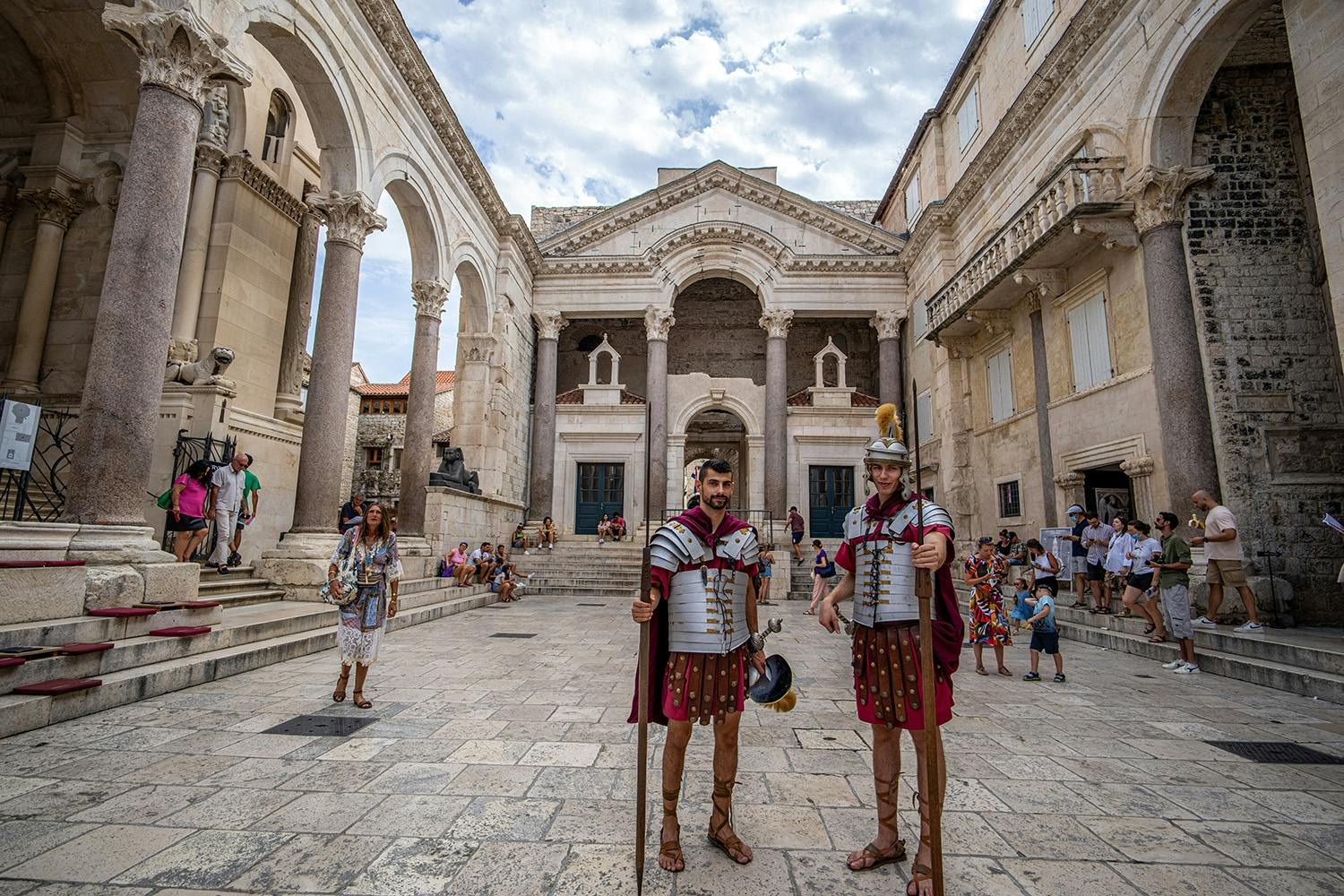
The Peristyle is the ceremonial heart of Diocletian’s Palace. This open courtyard is framed by columns, arches, stone steps and historic façades, creating one of the most atmospheric spaces in Split.
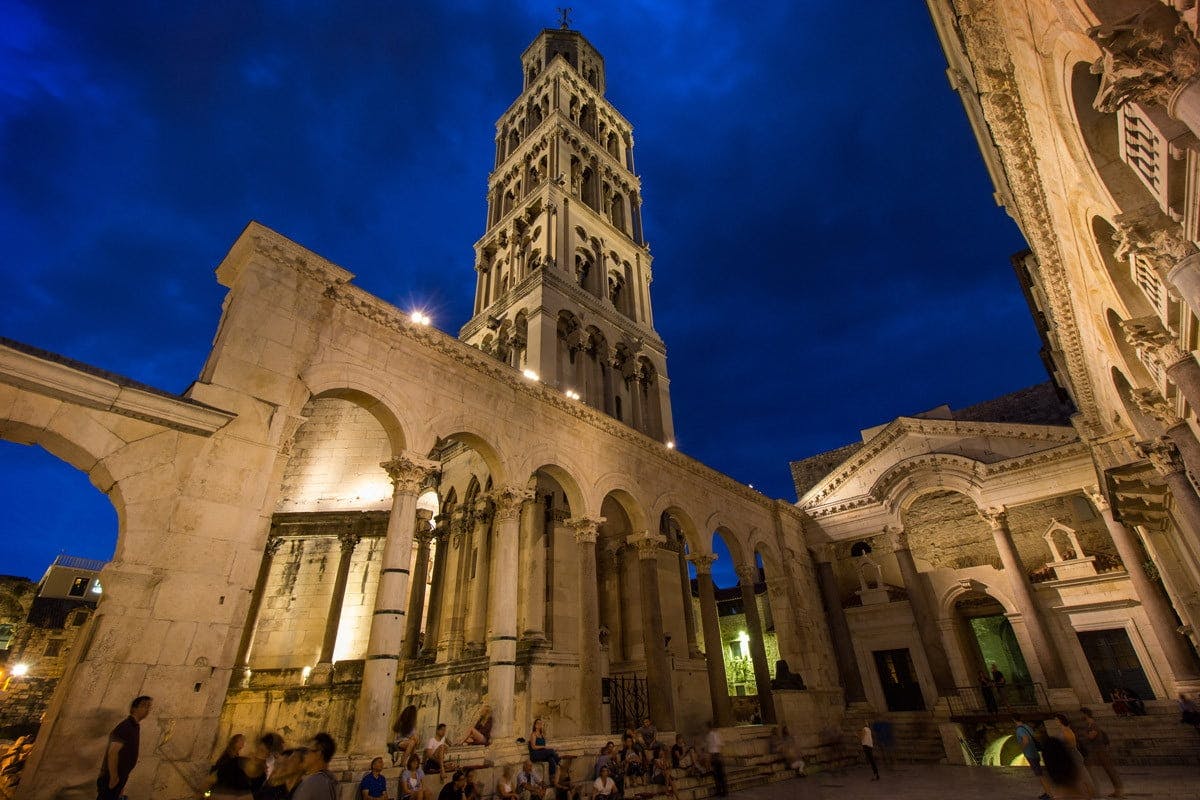
During the day, the Peristyle is busy with visitors, guides, musicians and people passing between the palace’s main sights. At night, it becomes especially beautiful, with warm lighting, stone architecture and a relaxed open-air atmosphere.
The Palace Cellars
The cellars are one of the most fascinating parts of the palace. These underground spaces once supported the emperor’s private quarters above and today provide a powerful sense of the palace’s original scale.
The vaulted rooms, stone passages and cool atmosphere make the cellars feel very different from the sunny streets above. They are also well known to Game of Thrones fans because parts of the cellars were used as filming locations connected with Daenerys and her dragons.
Cathedral of Saint Domnius
The Cathedral of Saint Domnius is one of Split’s most important landmarks. It was built within the former mausoleum of Emperor Diocletian, giving it an extraordinary historical twist: a Roman emperor’s tomb became a Christian cathedral.
The cathedral complex includes the church, crypt, treasury and bell tower. Climbing the bell tower is one of the best ways to see Split from above, with views over the palace rooftops, the Adriatic Sea, the harbour and nearby islands.
The Bell Tower
The bell tower of Saint Domnius rises above the Old Town and is one of Split’s most recognisable features. The climb involves stairs and some narrow sections, but the view from the top is one of the highlights of the city.
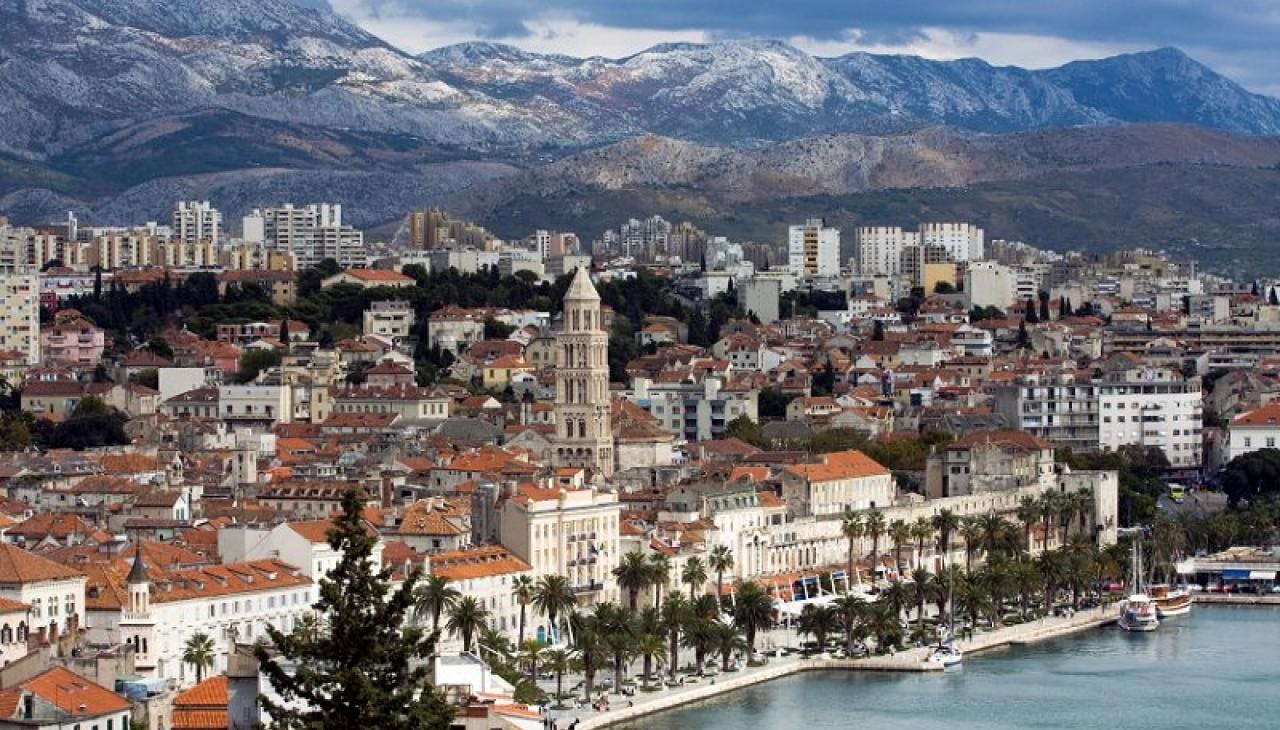
From above, you can appreciate how the palace, Old Town, Riva promenade and harbour fit together. It is especially rewarding in the morning or late afternoon when the light is softer.
Temple of Jupiter
The Temple of Jupiter is another important ancient feature within the palace. Small but atmospheric, it gives visitors a glimpse into the religious life of the original Roman complex.
The temple is often visited together with the Peristyle, cathedral and surrounding streets. Its compact size makes it easy to include in a short walking route through the palace.
The Golden Gate
The Golden Gate was the main northern entrance to the palace and remains one of its most impressive gateways. Just outside the gate stands the large statue of Gregory of Nin, whose toe has become a popular photo stop and good-luck tradition.
The Golden Gate area is a useful starting point for exploring the palace because it connects the Roman layout with the city streets beyond.
The Silver, Iron and Bronze Gates
Diocletian’s Palace had four main gates, each facing a different direction. The Silver Gate, Iron Gate and Bronze Gate help visitors understand the palace’s original defensive and urban plan.
The Bronze Gate, on the southern side, connects the palace cellars with the waterfront. This makes it one of the most atmospheric entrances, especially if you approach from the Riva promenade.
The Egyptian Sphinxes
One of the most surprising details inside the palace is the presence of ancient Egyptian sphinxes. These were brought to Split in Diocletian’s time and add another layer to the site’s imperial character.
The sphinx near the Peristyle is one of the most photographed details in the palace and a reminder of the far-reaching power and collecting habits of the Roman world.
Game of Thrones Filming Locations
Diocletian’s Palace is also popular with Game of Thrones fans. The palace cellars and nearby streets were used in scenes connected with Meereen, including locations associated with Daenerys. Several Split walking tours combine palace history with filming-location stories.
Even if you are not a fan of the series, the filming connection adds another layer of interest. The same vaulted cellars and ancient stone streets that attract historians and architecture lovers also work naturally as fantasy-world settings.
Diocletian’s Palace and Split Old Town
The best way to experience Diocletian’s Palace is to treat it as both a historic monument and a living Old Town. Some travellers rush from sight to sight, but the palace is best enjoyed slowly.
Wander through narrow stone lanes, pause in small squares, look up at balconies and carved details, and follow passageways without worrying too much about getting lost. The palace is compact, and getting turned around is part of the experience.
The Riva Promenade
The Riva promenade sits just outside the southern side of the palace and is one of Split’s most enjoyable public spaces. Lined with palm trees, cafés and harbour views, it is perfect for a walk before or after exploring the palace.
In the morning, the Riva is good for coffee and people-watching. In the evening, it becomes a social promenade where locals and visitors gather beside the Adriatic.
Best Time to Visit Diocletian’s Palace
Diocletian’s Palace can be visited year-round, but spring and autumn are especially pleasant because the weather is comfortable and crowds are usually easier to manage. Summer brings long days, lively streets and warm evenings, but it can also be very busy.
Early morning is the best time for quieter photos and a calmer walk through the palace. Evening is also magical, especially around the Peristyle and Riva, when the stone glows under warm lights and the Old Town becomes more atmospheric.
How Long Do You Need at Diocletian’s Palace?
Allow at least 2 to 3 hours to explore the main sights of Diocletian’s Palace, including the Peristyle, cathedral, cellars, gates and nearby Old Town streets.
If you want to climb the bell tower, visit multiple paid sections, take a guided tour, enjoy lunch or spend time photographing the streets, allow half a day. Many travellers return several times because the palace feels different in the morning, afternoon and evening.
Guided Tour or Self-Guided Visit?
A self-guided visit works well if you enjoy wandering and discovering streets at your own pace. The palace is compact and easy to explore casually.
A guided tour is worth considering if you want to understand the Roman layout, Diocletian’s story, medieval changes, hidden details and Game of Thrones filming locations. Because the palace is layered and complex, a good guide can make the site much more meaningful.
Nearby Attractions to Add to Your Visit
Marjan Hill
Marjan Hill is one of the best places for views over Split, the harbour, islands and Old Town. It is a good addition if you want nature, walking paths and panoramic scenery after exploring the stone streets of the palace.
Split Riva
The Riva promenade is directly beside the palace and is perfect for coffee, lunch, evening drinks or a gentle waterfront walk.
Green Market
Split’s Green Market sits close to the eastern side of the palace and is a lively place to see local produce, flowers, fruit, vegetables and everyday city life.
Bačvice Beach
Bačvice Beach is within walking distance of the Old Town and is one of Split’s most popular city beaches. It is a good option if you want to combine Roman ruins with a swim.
Split Harbour
Split Harbour is the starting point for ferries and island trips to places such as Hvar, Brač, Vis and Šolta. This makes the palace area a natural base for a Dalmatian Coast itinerary.
Suggested One-Day Split Itinerary
Morning: Start early inside Diocletian’s Palace and visit the Peristyle, Cathedral of Saint Domnius and Temple of Jupiter.
Late morning: Explore the palace cellars and walk through the Golden Gate, Silver Gate, Iron Gate and Bronze Gate areas.
Lunch: Eat in the Old Town or near the Riva promenade.
Afternoon: Walk to Marjan Hill for views, or relax at Bačvice Beach.
Evening: Return to the Peristyle and Riva for the best atmosphere after dark.
Suggested Two-Day Split Itinerary
Day One: Palace and Old Town
Explore Diocletian’s Palace in the morning.
Visit the cathedral, bell tower, cellars and Temple of Jupiter.
Have lunch in the Old Town.
Spend the afternoon at the Green Market, Riva and nearby squares.
Return to the Peristyle in the evening for atmosphere and photos.
Day Two: Views, Beaches and Islands
Walk up Marjan Hill for panoramic views over Split.
Swim at Bačvice Beach or another nearby beach.
Take a short boat trip or plan a longer island excursion if time allows.
Finish with dinner in the Old Town or along the waterfront.
What to Wear and Bring
Comfortable shoes: The palace streets are paved with smooth, worn stone that can be slippery.
Light clothing: Summer in Split can be hot, especially in enclosed stone streets.
Sun protection: Bring a hat, sunglasses and sunscreen for open squares and the Riva.
Water: Useful during warm months and walking tours.
Camera or phone: The palace is extremely photogenic, especially early and late in the day.
Light layer: Evenings by the waterfront can feel breezy outside peak summer.
Travel Tips for Visiting Diocletian’s Palace
Visit early in the morning for quieter streets and better photos.
Return at night to see the Peristyle and Riva at their most atmospheric.
Take care on polished stone paving, especially after rain.
Climb the bell tower if you want one of the best views over Split.
Use a guide if you want to understand the Roman and medieval layers of the palace.
Allow time to wander without a strict route; the small lanes are part of the charm.
Combine the palace with Marjan Hill, Bačvice Beach or a ferry trip for a fuller Split experience.
Is Diocletian’s Palace Worth Visiting?
Yes, Diocletian’s Palace is absolutely worth visiting. It is one of the most remarkable historic sites on the Adriatic and one of the best-preserved examples of Roman architecture still used as part of a living city.
The palace offers far more than ruins. It has churches, squares, cellars, gates, cafés, homes, restaurants, music and everyday life inside ancient walls. Whether you love Roman history, photography, Old Town atmosphere, Game of Thrones filming locations or coastal city breaks, Diocletian’s Palace is the highlight of Split.
Final Thoughts
Diocletian’s Palace is not just a place to visit; it is a place to enter, wander and absorb. Its stone lanes, Roman columns, medieval towers, underground chambers and lively squares create one of the most atmospheric historic centres in Europe.
For travellers exploring Croatia’s Dalmatian Coast, Split is worth visiting for the palace alone. Add the Riva, Marjan Hill, beaches, island ferries and seafood restaurants, and Diocletian’s Palace becomes the centrepiece of a rich and memorable Croatian itinerary.
Frequently Asked Questions About Diocletian’s Palace
Where is Diocletian’s Palace?
Diocletian’s Palace is located in the centre of Split, Croatia, beside the Adriatic Sea and the Riva promenade.
What is Diocletian’s Palace famous for?
Diocletian’s Palace is famous for its Roman history, Peristyle courtyard, palace cellars, Cathedral of Saint Domnius, ancient gates, Egyptian sphinxes, Old Town streets and Game of Thrones filming locations.
Is Diocletian’s Palace a real palace?
Yes, it was built as a palace and fortified residence for the Roman Emperor Diocletian. Over time, it became the historic core of Split’s Old Town.
Can you visit Diocletian’s Palace for free?
Many streets, squares and exterior areas of Diocletian’s Palace can be explored freely because they are part of the living Old Town. Some attractions, such as the cellars, cathedral areas and bell tower, may require tickets.
How long should I spend at Diocletian’s Palace?
Allow 2 to 3 hours for the main sights, or half a day if you want to explore slowly, climb the bell tower, visit the cellars and enjoy cafés or restaurants inside the palace area.
Was Diocletian’s Palace used in Game of Thrones?
Yes, parts of Diocletian’s Palace, especially the cellars and nearby streets, were used for Game of Thrones filming locations connected with Meereen and Daenerys.
What should I not miss in Diocletian’s Palace?
Do not miss the Peristyle, palace cellars, Cathedral of Saint Domnius, bell tower, Temple of Jupiter, Golden Gate, Bronze Gate and the evening atmosphere around the Riva.
Is Diocletian’s Palace suitable for families?
Yes, families can enjoy Diocletian’s Palace, especially the open squares, Roman gates, underground cellars and lively streets. Children should be supervised on polished stone paving and narrow stairways.
Sponsored Popular Items
Quick take: Musement.com offers a worldwide selection of tours and attractions
Split Old City and Diocletian's Palace Guided Walking Tour Croatia Split old city and Diocletian's Palace guided walking tour is a convenient way to add structure, local context and purposeful sightseeing to the itinerary. Check current availability, inclusions and booking details before you go.
Split Old City and Diocletian's Palace Evening Walking Tour Croatia Split old city and Diocletian's Palace evening walking tour brings several elements of the destination together in one organised experience. Check current availability, inclusions and booking details before you go.
Split Old City and Diocletian's Palace Private Walking Tour Croatia Split old city and Diocletian's Palace private walking tour brings several elements of the destination together in one organised experience. Check current availability, inclusions and booking details before you go.
Waterford Treasures Museums: Bishop's Palace Entry Ticket Best deals for Waterford Treasures Museums: Bishop's Palace Entry Ticket. Discover Waterford's rich Georgian history and heritage with a ticket to the Bishop's Palace Museum. Explore the museum at your own pace self guided or join a costumed guide. Available from getyourguide.com.
Waterford Treasures: Splendor & Scandal in Bishop's Palace Best deals for Waterford Treasures: Splendor & Scandal in Bishop's Palace. Life Behind the Doors of Georgian Waterford - Discover the secrets of Bishop's Palace in Waterford on a reenactor-led experience through the affairs and tantalising love stories of Georgian Waterford Available from getyourguide.com.
Tokyo: TeamLab Borderless & Imperial Palace History Tour Best deals for Tokyo: TeamLab Borderless & Imperial Palace History Tour. Explore Tokyo's contrasts: spend 1.5 hours at teamLab Borderless digital art museum, followed by a historic walk through the Imperial Palace East Gardens. Available from getyourguide.com.
Tokyo: Run the Samurai’s Path Around the Imperial Palace Best deals for Tokyo: Run the Samurai’s Path Around the Imperial Palace. Run the path the samurai once walked on a guided tour of Tokyo. Learn about the Imperial Palace and Japanese history from your guide, and stop at the best photo spots along the way. Available from getyourguide.com.
Tokyo: Imperial Palace and Edo Gardens (FRENCH LIVE GUIDE) Best deals for Tokyo: Imperial Palace and Edo Gardens (FRENCH LIVE GUIDE). Small-group guided visit 100% in French: Imperial Palace, gardens, samurai, and shoguns with a passionate French-speaking live guide. The entire tour is conducted in French only! Available from getyourguide.com.