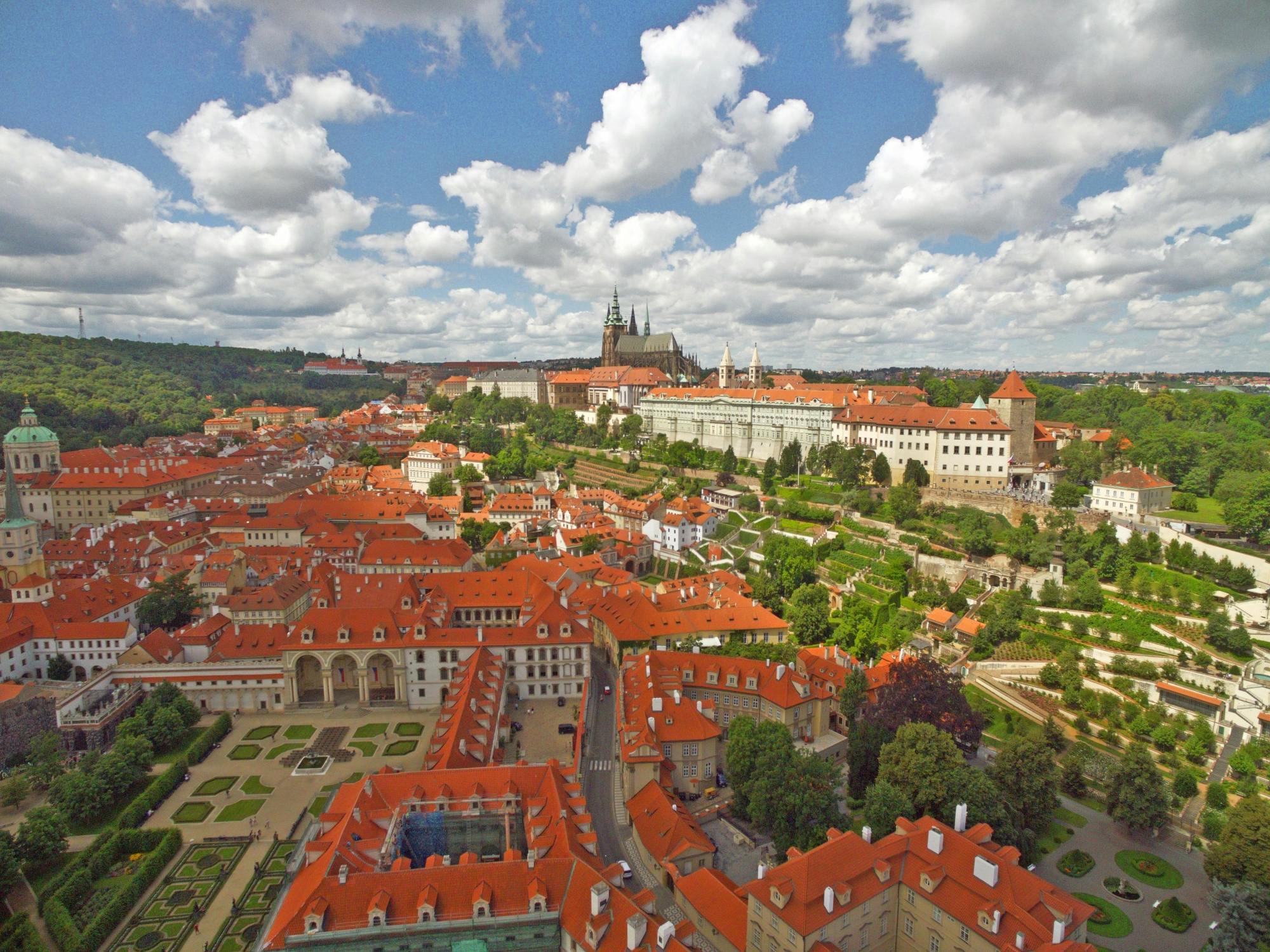
St. Vitus Cathedral, located within Prague Castle, is a Gothic masterpiece and the most important ecclesiastical building in the Czech Republic. Its construction began in 1344 under Emperor Charles IV, intended as a coronation church, royal crypt, and treasury for precious relics. The cathedral was designed initially by Matthias of Arras in a French Gothic style and later significantly developed by architect Peter Parler, who introduced bold innovations like net vaulting in the choir.
Sponsored Popular Items
Quick take: Musement.com offers a worldwide selection of tours and attractions
Prague Walking Tour of Old Town & Prague Castle Czech Republic Prague walking tour of Old Town and Prague Castle is a convenient way to add structure, local context and purposeful sightseeing to the itinerary. Check current availability, inclusions and booking details before you go.
The cathedral took nearly 600 years to complete, with construction halting during the Hussite Wars in the 15th century and resuming in the 19th century under Neo-Gothic architects Josef Kranner and Josef Mocker, finally finishing in 1929. Architecturally, it combines medieval Gothic with Neo-Gothic features, achieving a harmonious and majestic appearance.
St. Vitus Cathedral houses key treasures including the tomb of St. Wenceslaus (patron saint of Bohemia), the Czech Crown Jewels, and stunning Art Nouveau stained-glass windows by Alfons Mucha. It has been the site of coronations, funerals, and significant religious and state ceremonies throughout Czech history.
Notable features include its soaring spires, intricately decorated interiors, gothic gargoyles, and a rose window depicting biblical scenes. The cathedral is a symbol of Czech national pride and a central landmark in Prague, admired worldwide for its architectural beauty and historical significance
Sponsored Popular Items
Quick take: Musement.com offers a worldwide selection of tours and attractions
Prague Walking Tour of Old Town & Prague Castle Czech Republic Prague walking tour of Old Town and Prague Castle is a convenient way to add structure, local context and purposeful sightseeing to the itinerary. Check current availability, inclusions and booking details before you go.
Alchemy and mysteries of Prague Castle Czech Republic Alchemy and mysteries of Prague Castle adds structure, local context and purposeful sightseeing to the itinerary. Check current availability, inclusions and booking details before you go.
Prague Castle and Lobkowicz Palace Entrance Tickets Czech Republic Prague Castle and Lobkowicz Palace Entrance Tickets provides a structured way to visit a notable attraction or cultural site. Check current availability, inclusions and booking details before you go.
Prague Castle Skip-the-Line Ticket with Minibus Transfer Czech Republic Prague Castle skip-the-line tickets and minibus transfer provides a structured way to visit a notable attraction or cultural site. Check current availability, inclusions and booking details before you go.
Introductory Tour of Prague Castle with Ticket – Heritage Tour Czech Republic Introductory tour of Prague Castle with ticket is a convenient way to add structure, local context and purposeful sightseeing to the itinerary. Check current availability, inclusions and booking details before you go.
Prague Castle Skip-the-Line Tickets with One Hour Tour – Heritage Tour Czech Republic Enjoy spectacular city views from the Charles Bridge tram , skip the long lines to enter Prague Castle , and explore the stunning interiors of St. Check current availability, inclusions and booking details before you go.
Prague Castle, Orloj and National Museum or Jewish Quarter – Entry Ticket Czech Republic Prague Castle, Orloj and National Museum or Jewish Quarter provides a structured way to visit a notable attraction or cultural site. Check current availability, inclusions and booking details before you go.
Prague Castle Self-Guided Audio Tour – Self-Guided Experience Czech Republic Step into the heart of Czech history and explore the largest ancient castle complex in the world at your own pace. Check current availability, inclusions and booking details before you go.
Guided Tour of the Prague Castle Complex – Heritage Tour Czech Republic Guided tour of the Prague Castle complex is a convenient way to add structure, local context and purposeful sightseeing to the itinerary. Check current availability, inclusions and booking details before you go.